The Forbidden City
紫禁城 · Zǐjìnchéng
980 buildings, 8,700 rooms, 24 emperors and five centuries in which almost no outsider was allowed through the gate.
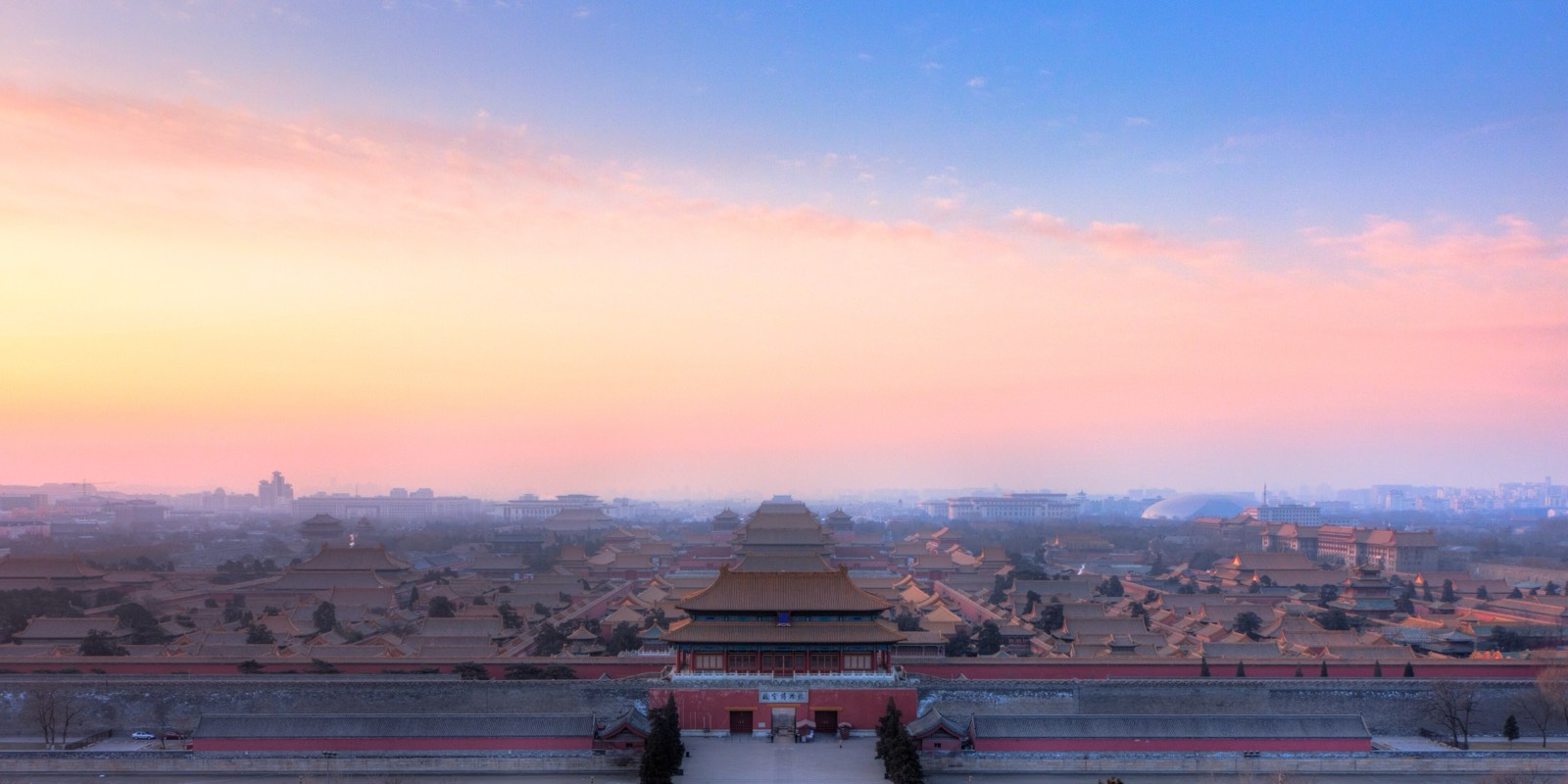
Photo: Pixelflake · CC BY-SA 3.0
The Palace Museum — the Forbidden City to everyone except its curators — is the largest surviving wooden palace complex in the world, and the scale is the point. It took a million labourers and fourteen years to build, was finished in 1420, and functioned as the seat of Ming and Qing government until 1924, when the last emperor Puyi was finally evicted. Seventy-two hectares, a moat 52 metres wide, and a strict north–south axis that the entire city of Beijing was laid out to obey.
You enter from the south through the Meridian Gate and move through a sequence designed to make a supplicant feel small: an enormous empty stone courtyard, then the marble terraces of the three great halls of state, then — abruptly — the far more intimate, domestic, cluttered inner court where the imperial family actually lived. That shift, from ceremonial to human, is the experience. Most visitors march straight up the axis in ninety minutes and miss it entirely.
The collection is the other half. The museum holds 1.86 million objects, of which a fraction is ever on display: Song ceramics, Qing enamels, imperial clocks that a Jesuit built to amuse the Qianlong emperor, and the Treasure Gallery's jade and gold. The eastern and western side-palaces that house them are also, conveniently, where the crowds are not.
Why go
- The best-preserved imperial complex on earth, and the physical centre of Chinese political imagination for 500 years
- A museum collection that would be a world-class destination even without the buildings
- It anchors the whole Beijing axis — Tiananmen, Jingshan, the Drum Tower — in a single walkable day
- The recent restorations have opened areas, including the Qianlong Garden, that were shut for decades
Highlights
Hall of Supreme Harmony
The largest wooden hall in China, raised on three tiers of carved marble. Coronations, New Year audiences and the announcement of exam results happened here. Look for the ten mythical beasts on the roof ridge — the only building in the country permitted the full set.
The Inner Court
Where the emperor actually slept, ate and argued with his mother. Smaller courtyards, kang beds, cluttered rooms, a completely different register from the halls of state.
Treasure Gallery
A separate ¥10 ticket in the northeast corner. Imperial jade, the Nine Dragon Screen, and the Qianlong emperor's astonishing retirement garden. Almost always quiet.
Clock and Watch Gallery
Eighteenth-century European automaton clocks given as diplomatic gifts, several still wound and demonstrated twice a day. Genuinely strange and wonderful.
Jingshan Park
Not inside the palace but directly north of it, ¥2, a ten-minute climb. The view south over the sea of golden roofs is the photograph you actually want, and it is best an hour before sunset.
Photographs
Getting there & practicalities
Getting there
Metro Line 1 to Tiananmen East, then walk north through the gate — allow 25 minutes and a security check. Or Line 8 to Shichahai and enter from the north (Shenwumen) side, which is usually faster.
Tickets
¥60 April–October, ¥40 November–March. Treasure Gallery and Clock Gallery ¥10 each. Tickets are sold ONLY online, are capped at 40,000 a day, require your passport number, and released seven days ahead at 20:00 Beijing time. They sell out.
Opening hours
08:30–17:00 (last entry 16:10) April–October; 08:30–16:30 in winter. Closed Mondays except in July and August.
Best time of day
Book the earliest slot. By 10:30 the central axis is shoulder to shoulder.
What everyone gets wrong
- Movement is one-way, south to north. You cannot double back, so decide before you enter whether you are doing the side galleries.
- Bring your actual passport. It is scanned at the gate and matched to the booking; a photo will not do.
- The free audio guide app is mediocre. The ¥40 rented handset with automatic GPS triggering is much better.
- Combine with Jingshan the same afternoon and the Drum and Bell Towers at dusk — it is all within a 2 km walk.
- Allow at least three hours. Four if you are doing the Treasure Gallery.
What to eat
- Siji Minfu near the east gate for the best-value Peking duck in the city — queue or book
- The hutong noodle shops around Nanluoguxiang, ten minutes north on foot
→Combine it with