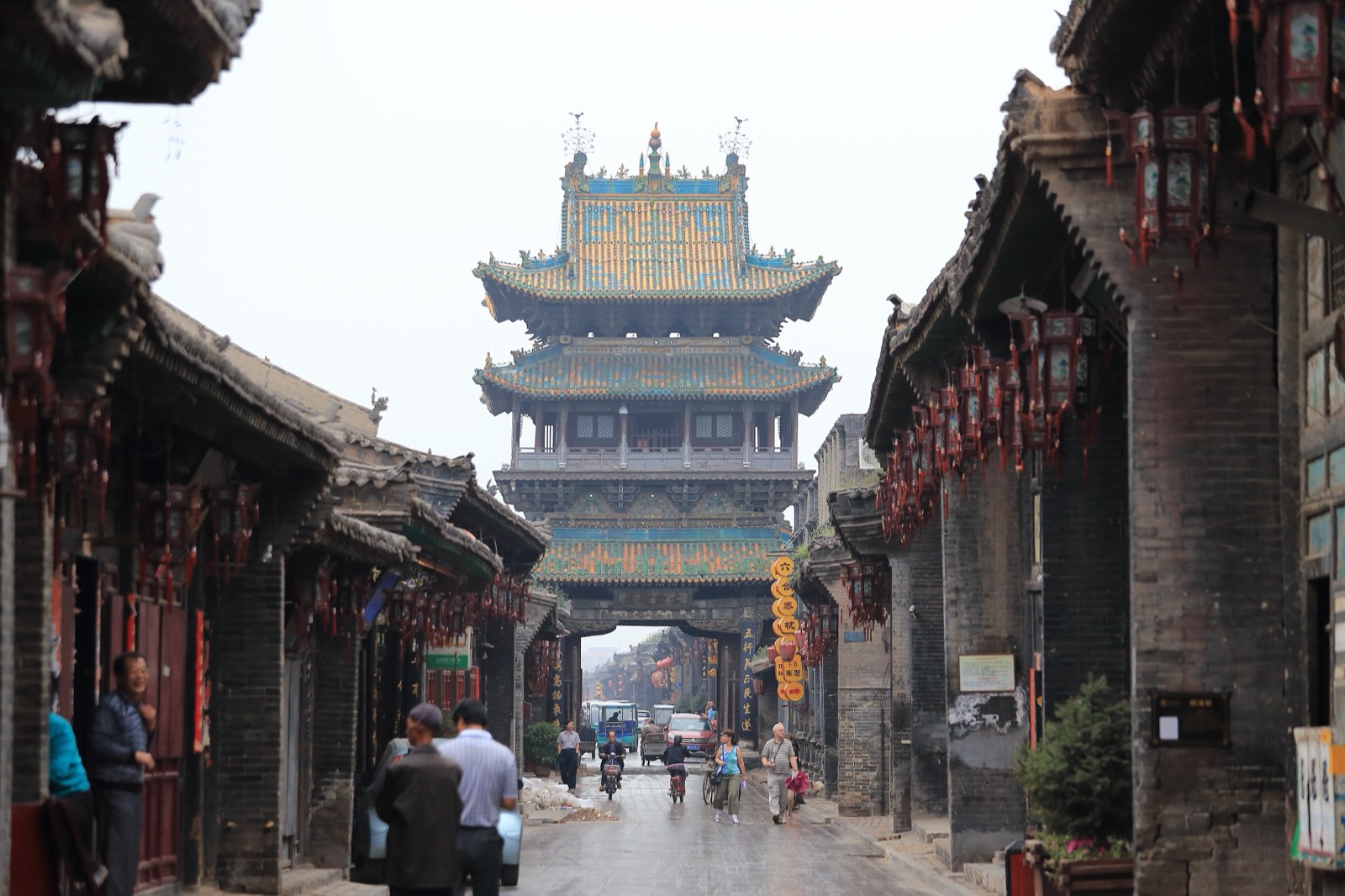
Pingyao Ancient City
平遥古城 · Píngyáo Gǔchéng
A complete walled Ming county town that missed the twentieth century — and invented Chinese banking.
Photo: Zhangzhugang · CC BY-SA 3.0
Pingyao is the best-preserved ancient walled town in China, and it survived by accident: Shanxi's merchant wealth collapsed in the early 1900s, the town became too poor to demolish anything, and by the time the wrecking balls reached the rest of the country in the 1980s Pingyao was too obviously valuable to touch. The result is a 2.25 km² grid of grey-brick Qing courtyard houses inside a complete 6 km wall with 72 watchtowers, laid out in a plan that has barely changed since 1370.
In the nineteenth century this small town ran China's money. Rishengchang, founded here in 1823, was the country's first draft bank — it let a merchant deposit silver in Pingyao and draw it in Guangzhou against a coded paper note, and within decades it had branches across the empire and correspondents in Japan and Russia. At its peak more than twenty Pingyao banks handled the majority of China's interregional transfers. The old head offices are still on South Street, and several are museums.
It is touristy — the main streets are wall-to-wall vinegar shops and beef vendors — but the side lanes empty out completely after dark, and staying inside the walls in a courtyard guesthouse, under a kang bed with the lanterns on outside, is one of the more atmospheric nights in China.
Why go
- A genuinely intact Ming-Qing town rather than a reconstruction
- The birthplace of Chinese banking, told well across a dozen small museums on one ticket
- Courtyard guesthouses that are cheap, characterful and central
- Wang Family and Qiao Family compounds nearby: merchant mansions the size of villages
Highlights
City Wall
Walk the full 6 km circuit, ideally at dusk. The Kuixing tower on the southeast corner is the best vantage point over the grey rooftops.
Rishengchang Draft Bank
China's first bank, preserved with its counting rooms, secret code books and strongrooms. The single most interesting building in town.
County Government Office (Yamen)
A complete Ming-Qing courthouse, jail, granary and magistrate's residence. There is a staged court-case performance three times a day that is better than it sounds.
Ming-Qing Street
The commercial spine. Full of tourists by day, atmospheric by lantern-light, and the source of Pingyao beef and Shanxi aged vinegar.
Wang Family Compound
35 km away: 123 courtyards and 1,118 rooms of Qing merchant mansion, effectively a private walled town. Bigger and better preserved than the more famous Qiao compound.
Photographs
Getting there & practicalities
Getting there
Pingyao Ancient City station is on the Datong–Xi'an high-speed line: 3h from Beijing, 3h from Xi'an, 30 minutes from Taiyuan. The station is 6 km out; a taxi into the walls is ¥20–30. Cars cannot enter the old town.
Tickets
A single ¥125 through-ticket covers the wall and all 19 sites inside, valid three days. Wang Family Compound ¥55 separately.
Opening hours
Sites 08:00–18:00 in summer, 08:00–17:30 in winter. The streets themselves are always open.
Best time of day
Early morning before the day-trip coaches from Taiyuan, and after 18:00 when they leave.
What everyone gets wrong
- Stay inside the walls. Day-tripping Pingyao misses the entire point.
- The through-ticket is valid for three days and covers far more than you will use — do not buy individual entries.
- Rooms are traditional: thick walls, small windows, sometimes a heated kang platform. Charming, occasionally cold.
- Electric carts loop the town for ¥10 if the walking gets much; the grid is only about 1.5 km across.
- Skip the Qiao Family Compound if you are choosing one — Wang Family is three times the size and half the crowd.
What to eat
- Pingyao beef, braised and sliced cold, sold everywhere and genuinely good
- Wantuo — buckwheat jelly noodles in vinegar and chilli, the local snack
- Shanxi aged vinegar, which is drunk here as a digestif
→Combine it with
Nearby and next
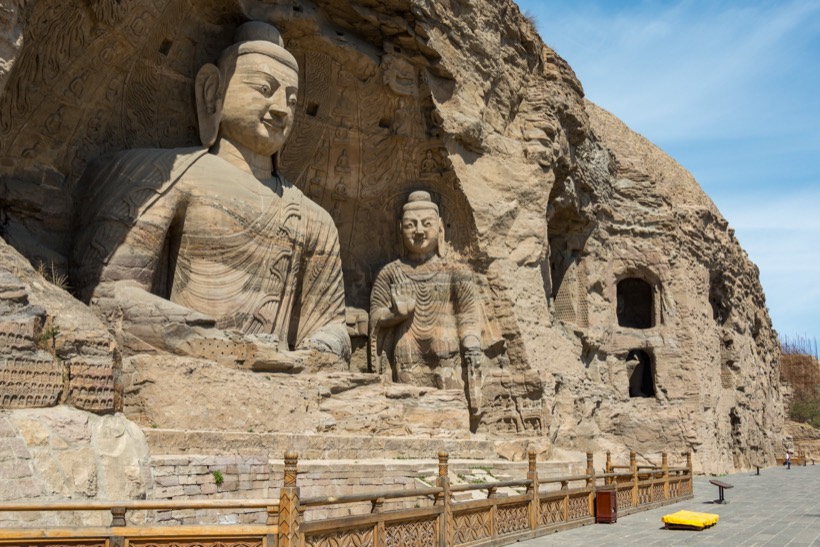 UNESCO
Yungang Grottoes & Datong 云冈石窟
Fifty-one thousand Buddhist statues carved into a sandstone cliff in the 460s, when the idea was still arriving from India.
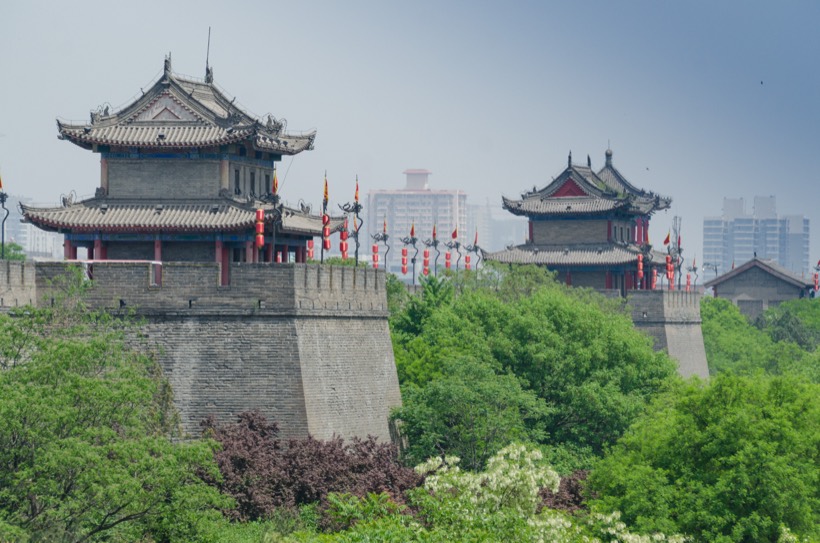
Xi'an Old City 西安古城
Cycle the most complete city wall in China, then eat your way through a Muslim quarter that has been here for 1,300 years.