Cantonese
粤菜
The cuisine the West thinks of as Chinese food — and almost nothing you have eaten abroad resembles it.
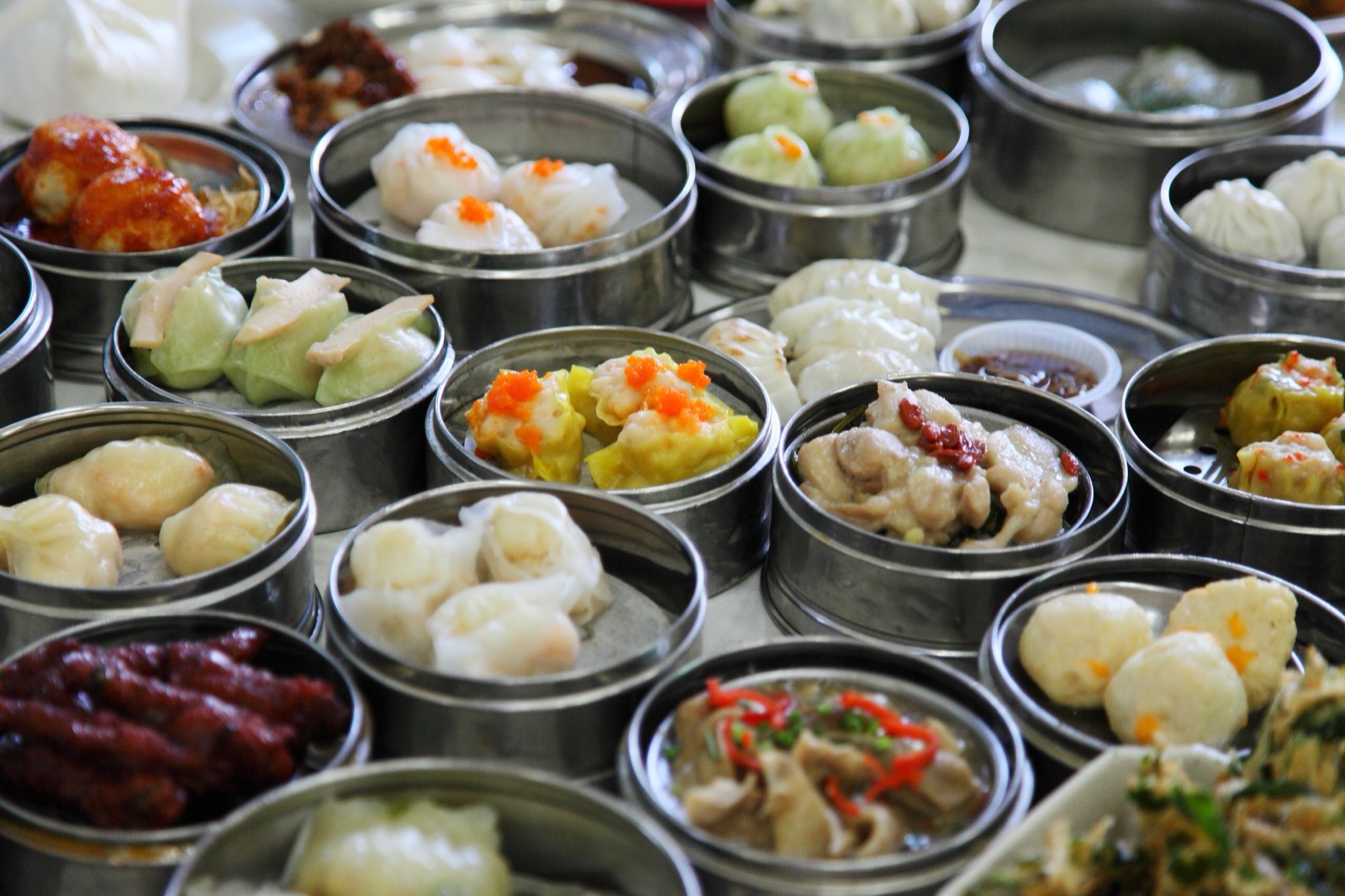
Photo: LeonardKong · CC BY 2.0
Cantonese cooking is built on the freshness of the ingredient and the restraint of the cook. The governing idea is qing — clear, clean, letting a thing taste of itself — which produces steamed fish with nothing but ginger, spring onion and hot oil, and a whole professional vocabulary around wok hei, the seared 'breath of the wok' that a good stir-fry carries. Guangdong's proximity to sea, river and subtropical farmland gave it the raw materials, and its emigrants gave the rest of the world its idea of Chinese food, filtered through whatever was available in San Francisco or Liverpool.
06Dishes to seek out
-
Dim sum 点心
A morning institution rather than a meal. Har gow (prawn dumplings with a translucent skin), siu mai, char siu bao, cheung fun rice rolls, and egg tarts. Best between 08:00 and 10:30.
-
Roast goose 烧鹅
Lacquered, crisp-skinned, hung in the window. Yat Lok in Hong Kong is the famous one; every siu mei shop in Guangzhou does a good version.
-
Steamed fish 清蒸鱼
A whole fish, steamed for precisely long enough, dressed with ginger, scallion, soy and smoking-hot oil poured over at the table.
-
Wonton noodles 云吞面
Bamboo-pressed egg noodles with springy texture, prawn wontons, and a broth built on dried flounder.
-
Char siu 叉烧
Barbecue pork, honey-glazed with charred edges. The half-fat cut is the one to ask for.
-
Old fire soup 老火汤
Soups simmered for hours with medicinal herbs and dried ingredients, drunk at the start of a family meal for their supposed properties.