Sichuan
川菜
Not simply hot — the defining sensation is ma la, a numbing tingle that arrives before the heat does.
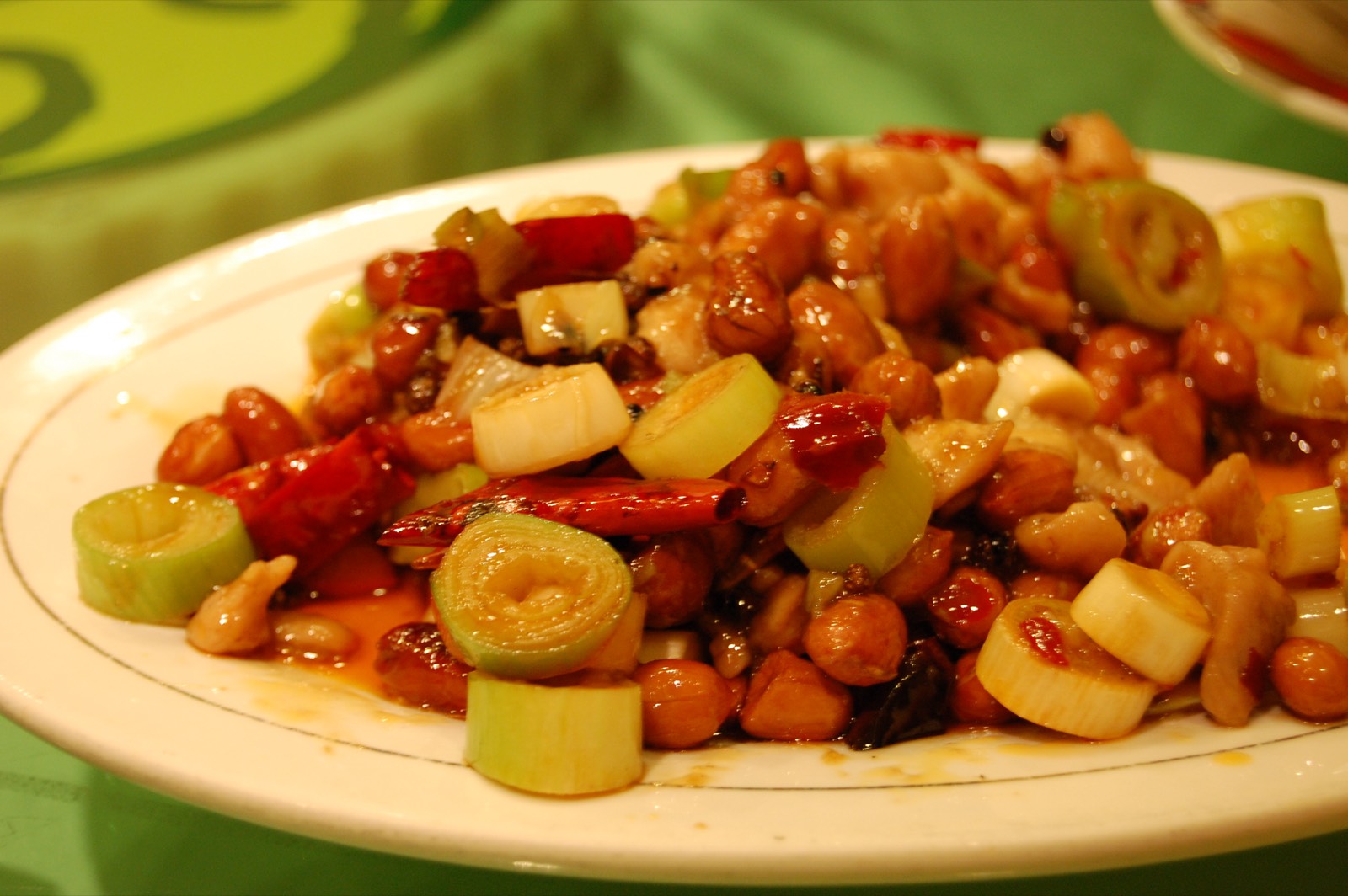
Photo: Steven G. Johnson · CC BY-SA 3.0
Sichuan's reputation for chilli is deserved and misleading. The chilli only arrived from the Americas in the seventeenth century; the older and stranger element is huajiao, the Sichuan peppercorn, which contains a molecule that vibrates the nerve endings on your lips at about fifty hertz. Combined with chilli it produces ma la, numbing-hot, and it is genuinely unlike anything in European cooking. Sichuan chefs recognise more than twenty distinct flavour profiles, of which only a handful involve chilli at all — the sweet-sour lychee flavour, the fish-fragrant profile built on pickled chilli and no fish, the strange-flavour sauce that balances all five tastes at once.
06Dishes to seek out
-
Mapo tofu 麻婆豆腐
Silken tofu in a fermented broad-bean sauce with minced beef and a heavy dusting of ground peppercorn. Invented at Chen Mapo in Chengdu in 1862, and still best there.
-
Dan dan noodles 担担面
A small bowl, no soup, sesame paste and chilli oil under a spoon of crisp pork. The authentic version is a snack, not a main.
-
Hotpot 火锅
A cauldron of beef tallow, dried chillies and peppercorn. Order a yuanyang split pot with a clear side, and dip everything in sesame oil with garlic to cut the heat.
-
Fish-fragrant aubergine 鱼香茄子
The profile that contains no fish: pickled chilli, ginger, garlic, vinegar and sugar. The best introduction to Sichuan for the chilli-averse.
-
Chuan chuan xiang 串串香
Hotpot on skewers, paid for by the stick, eaten at plastic tables until three in the morning.
-
Sweet-water noodles 甜水面
Thick chewy noodles in sweet soy and chilli — the counterweight to everything else on this list.