The Northwest
西北菜
Lamb, wheat, cumin and the tandoor — the food of the Silk Road, closer to Central Asia than to Beijing.
Photo: N509FZ · CC BY-SA 4.0
From Xi'an westward, Chinese food changes register. Rice disappears, wheat takes over in the form of hand-pulled noodles and flatbread, lamb becomes the default meat, and the seasoning shifts to cumin, coriander seed and dried chilli flakes. Much of it is halal — the Hui and Uyghur Muslim populations have shaped the region's cooking for a thousand years — and its lineage runs west through Central Asia rather than east to the coast. Bread is baked in tandoor ovens; noodles are pulled by hand to a thickness you specify.
06Dishes to seek out
-
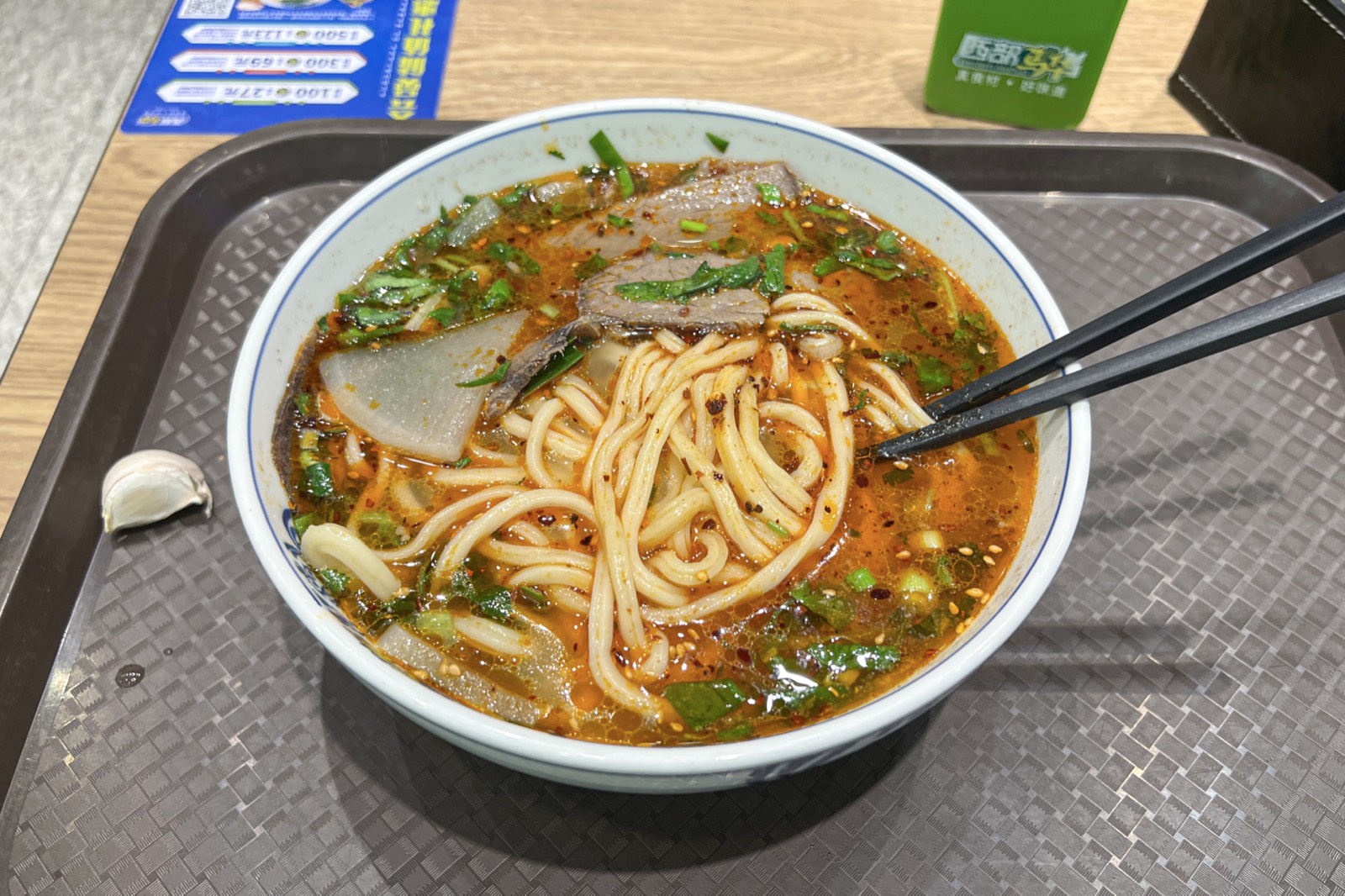
Lanzhou beef noodles 兰州牛肉面
Hand-pulled to order in nine named thicknesses, in a clear beef broth with white radish, chilli oil and coriander. Eaten for breakfast, and the pulling is worth watching.
-
Roujiamo 肉夹馍
Slow-braised, chopped pork or beef packed into a griddled flatbread. Reasonably described as China's oldest sandwich — the bread recipe is Qin dynasty.
-
Biangbiang noodles biángbiáng面
One enormous belt-wide hand-slapped noodle, dressed with chilli, garlic and hot oil. The character used to write it has 58 strokes and is not in most fonts.
-
Yangrou paomo 羊肉泡馍
You are given a hard flatbread and a bowl, and you crumble the bread yourself into pieces the size of a fingernail. It goes back to the kitchen and returns as mutton soup.
-
Laghman 拉条子
Uyghur hand-pulled noodles with lamb, peppers, tomato and onion. The staple from Turpan to Kashgar.
-
Big plate chicken 大盘鸡
Xinjiang's communal dish: chicken, potato and chilli stewed together, with wide belt noodles added to the sauce at the end.