Yunnan & Guizhou
滇黔菜
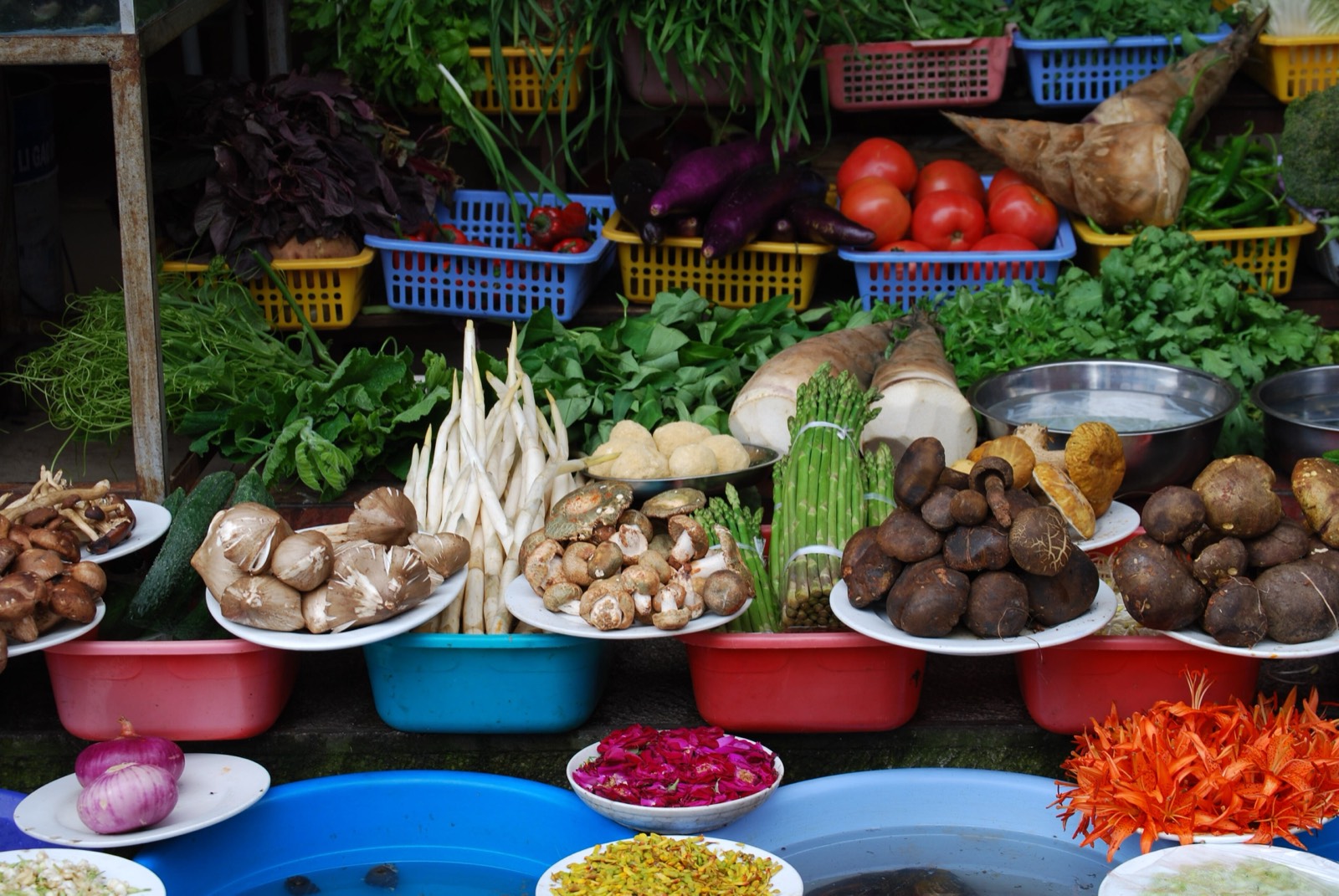
Wild mushrooms, sour broths, flowers, fermented everything — the most botanically curious cooking in China.
Photo: Cs california · CC BY-SA 3.0
The southwestern highlands are the most biodiverse part of the country and the cooking follows. Yunnan uses ingredients that appear nowhere else in Chinese food — dozens of wild mushroom species, edible flowers, mint, banana flower, goat cheese — reflecting both the terrain and the twenty-five minority peoples who live in it. Guizhou, poorer and saltless historically, built its cuisine on fermentation instead, and its sour flavours are the most distinctive in the country. Neither is much known abroad and both are worth restructuring a trip around.
06Dishes to seek out
-
Crossing-the-bridge noodles 过桥米线
A bowl of scalding chicken stock under a film of oil, and a tray of raw ingredients you add yourself in sequence. Yunnan's most famous dish, with a good legend attached.
-
Wild mushrooms 野生菌
June to September only. Matsutake, chicken-of-the-woods, boletus — usually simply stir-fried with garlic and chilli. Some species require careful cooking and every restaurant knows which.
-
Sour fish soup 酸汤鱼
Guizhou's defining dish: a broth fermented from tomato and rice water, with river fish and wild herbs. Sour, savoury and completely distinctive.
-
Rubing goat cheese 乳饼
The Bai people's fried goat cheese — one of the very few cheeses in Chinese cooking, and evidence of old trade routes.
-
Naxi baba 纳西粑粑
A thick fried flatbread from Lijiang, sweet with sugar or savoury with ham, eaten for breakfast.
-
Zhe'ergen 折耳根
Fish-mint root, raw, in a chilli dressing. Guizhou people love it; almost nobody else does. Try it once.