Fenghuang Ancient Town
凤凰古城 · Fènghuáng Gǔchéng
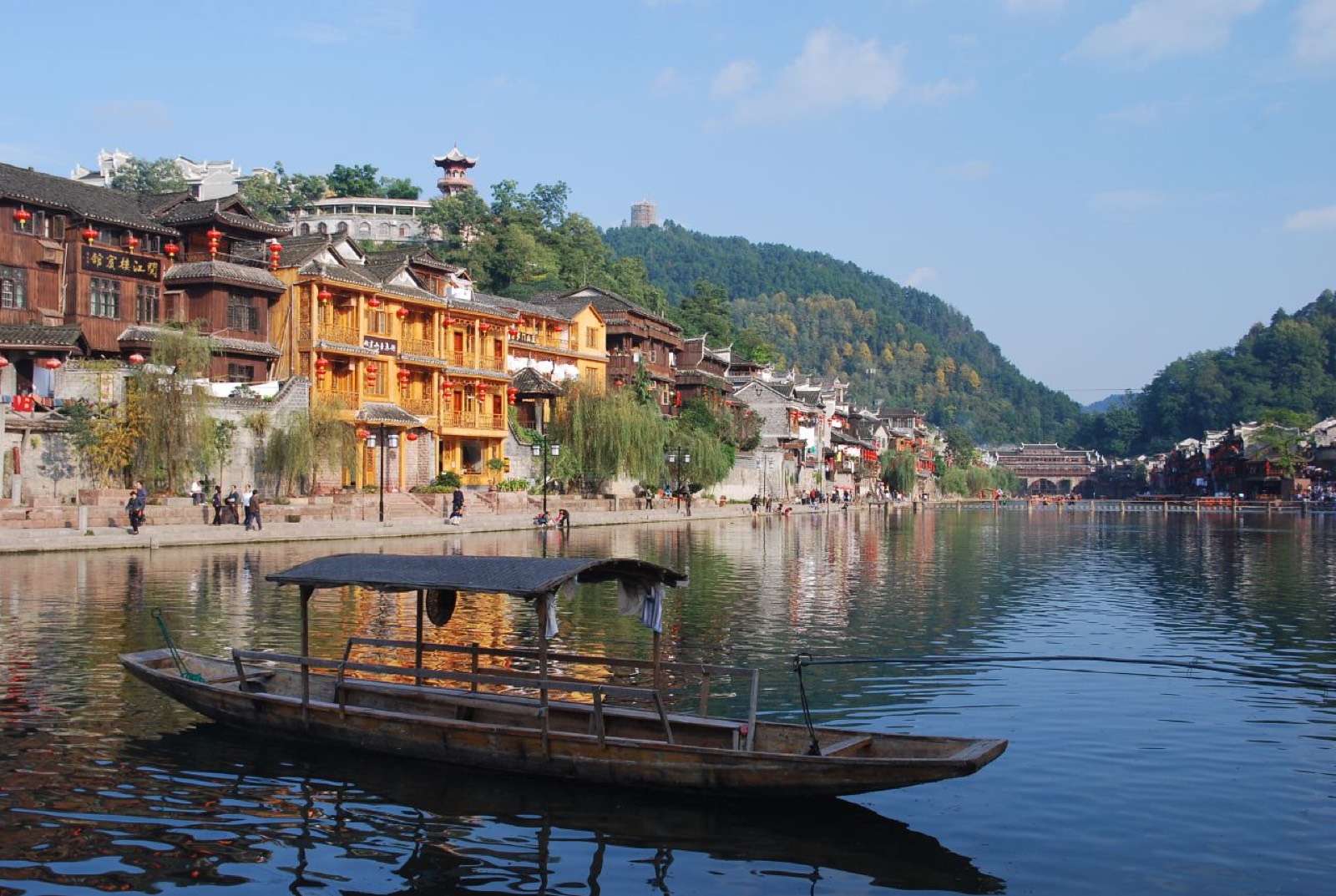
Stilt houses on wooden legs over the Tuo River, lit red at night, in a Miao and Tujia town the writer Shen Congwen made famous.
Photo: Vera & Jean-Christophe · CC BY-SA 2.0
Fenghuang — 'phoenix' — is a Qing garrison and trading town in western Hunan, wedged into a valley where the Tuo River runs between hills. What makes it distinctive is the diaojiaolou: wooden stilt houses built out over the water on long timber legs, three and four storeys, packed shoulder to shoulder along both banks for a kilometre. Add the Ming city wall, several covered bridges, and a set of stepping stones across the river, and it is one of the most photogenic towns in China.
It owes its fame to Shen Congwen, the great modern writer who was born here in 1902 and set most of his fiction in this landscape of ferrymen, soldiers and Miao villages. His Border Town remains the standard literary account of pre-revolutionary rural China, and his grave sits on the riverbank a short walk upstream.
The place is unapologetically commercial now: bars along the water, drum shows, silver shops, and a nightlife that is loud until late. Chinese travellers know it as a party town as much as a heritage one. It is still beautiful — particularly from about 05:30, when mist sits on the river and the only people out are women washing clothes on the stones, and again from around 19:30 when the entire waterfront lights up in red and gold and reflects.
Why go
- The best night-time townscape in China, and the reflections genuinely do look like the photographs
- Miao and Tujia culture, with village markets in the surrounding hills
- Four hours from Zhangjiajie, so the two make a natural pairing
- Cheap: guesthouses on the river from ¥150, and street food throughout
Highlights
The Tuo River waterfront at night
From Hong Bridge to the north gate. Stilt houses lit from below, reflections, and boats. Busy but unmissable.
Stepping stones & the wooden footbridge
Two parallel crossings just downstream of the north gate — the low stone piers and the narrow plank bridge. Best at dawn.
Hong Bridge (Rainbow Bridge)
A covered Ming bridge with two levels of shops and a viewing gallery over the river.
Shen Congwen's former residence & grave
A small Qing courtyard house in the old lanes, and a simple riverside grave under a boulder inscribed with his own words.
Southern Great Wall
13 km out: a Ming defensive wall built not against Mongols but against the Miao, running over the hills. Historically uncomfortable and visually striking.
Miao villages
Shanjiang and Laodong, 20–30 km away, with weekly markets and far less tourism than the town.
Photographs
Getting there & practicalities
Getting there
Fenghuang Ancient City station opened on the Zhangjiajie–Huaihua high-speed line — 1h from Zhangjiajie, 4h from Changsha. The station is 20 km from town with shuttle buses. Buses also run from Jishou (40 min).
Tickets
Walking the town is free. A ¥148 combined ticket covers nine sites including Shen Congwen's residence, the Hong Bridge gallery and a river boat. Most visitors skip it.
Opening hours
The town never closes. Ticketed sites 08:00–18:00.
Best time of day
05:30–07:30 for mist and emptiness; 19:30–21:00 for the lights. The middle of the day is the worst time.
What everyone gets wrong
- Book a riverside room facing the water — but note that bar noise carries until 02:00 on the main stretch. Ask for the quieter upstream end.
- The combined ticket is poor value unless you want the Shen Congwen sites specifically.
- Weekends and holidays are extremely crowded. Midweek it is a different town.
- Boat trips on the river are ¥30–50 and give you the stilt houses from the water. Best at dusk.
- Zhangjiajie plus Fenghuang is a very satisfying five-day western Hunan trip.
What to eat
- Blood-curd duck (xuebaya), the local speciality, and sour fish soup
- Ginger candy, kiwi-fruit cakes and rice wine sold along the waterfront
→Combine it with
Nearby and next
 UNESCO
Zhangjiajie 张家界
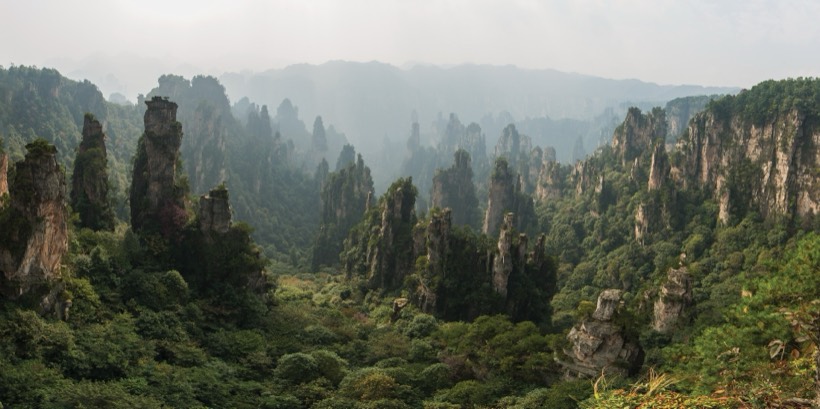
Three thousand quartz-sandstone pillars rising out of the cloud — the mountains Avatar borrowed and never gave back.
Guizhou: Miao & Dong Country 贵州苗侗村寨
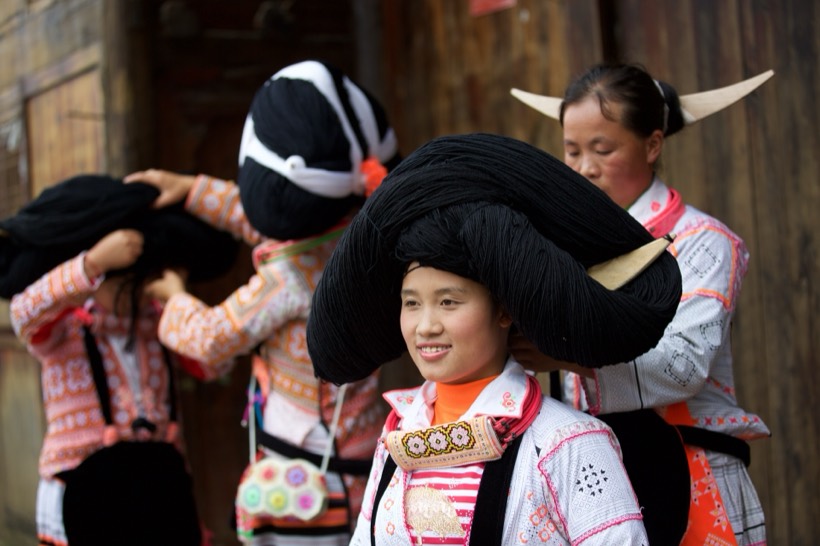
Hillside villages of a thousand stilt houses, silver headdresses weighing ten kilos, and drum towers built without a single nail.