Kashgar
喀什 · Kāshí
Closer to Baghdad than to Beijing: a Uyghur oasis city where the Karakoram, Pamir and Tian Shan ranges meet.
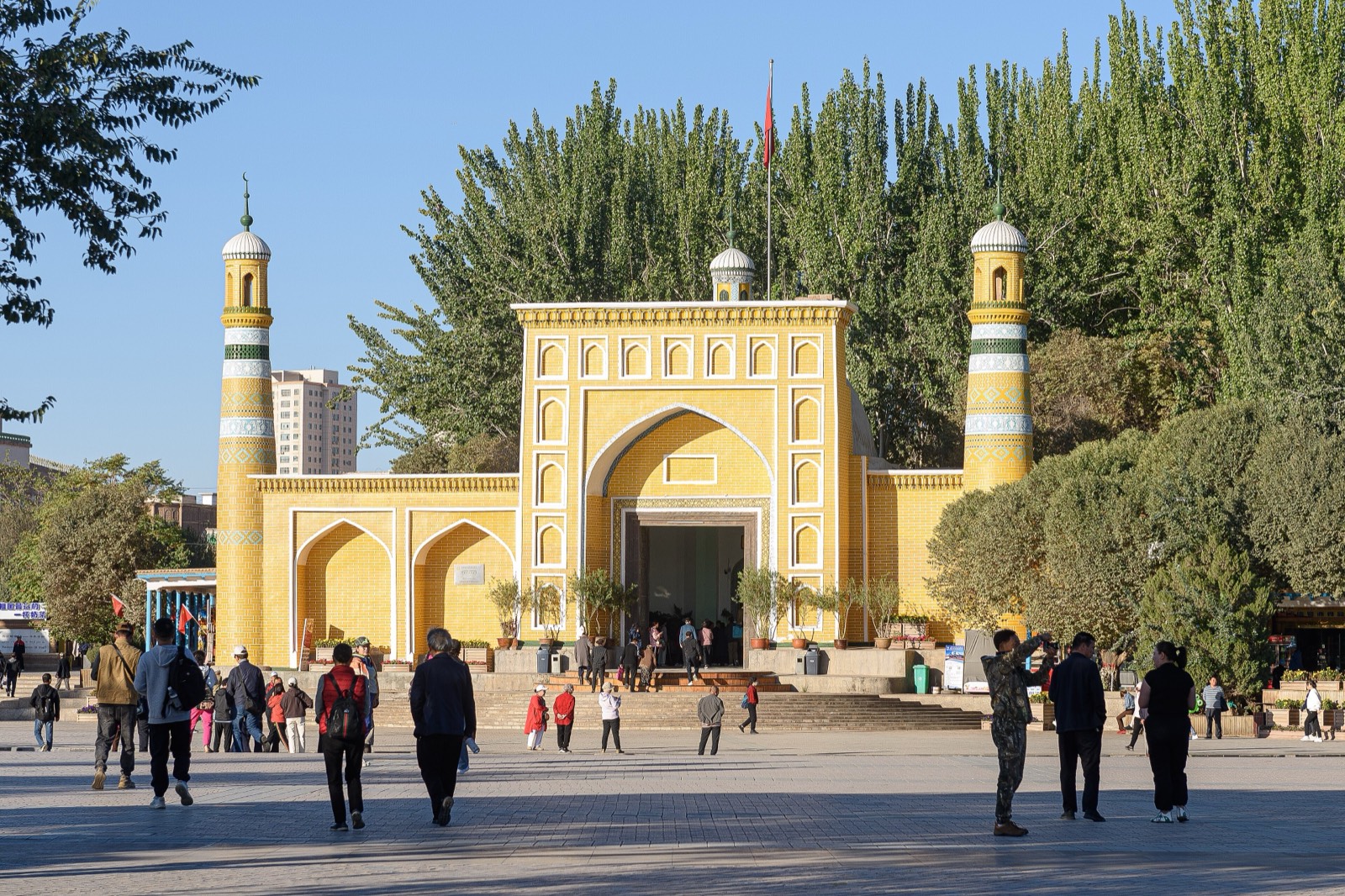
Photo: N509FZ · CC BY-SA 4.0
Kashgar sits at the western tip of China, 4,000 km from Shanghai and a few hours' drive from the Kyrgyz, Tajik and Pakistani borders. For two thousand years it was the junction where the northern and southern Silk Road routes around the Taklamakan reconverged before crossing the Pamirs, and the culture is Central Asian: Uyghur-speaking, Muslim, with a bazaar economy, lamb and nan bread, and a rhythm set by prayer times rather than Beijing time — the city runs unofficially two hours behind the national clock.
The Old Town has been extensively rebuilt since 2009 under an earthquake-safety programme that was, depending on who you ask, either a necessary intervention or a demolition. What stands now is a mix of genuinely old lanes, faithfully rebuilt mud-brick and some frank reconstruction, and it remains atmospheric — carpet workshops, coppersmiths, bakeries pulling nan out of tandoors, and children everywhere.
Two things are unmissable. The Sunday livestock market, 8 km outside town, where Uyghur, Kyrgyz and Tajik herders trade sheep, cattle, camels and donkeys exactly as they have for centuries, is the most extraordinary market in China. And the Karakoram Highway south — past Karakul Lake at 3,600 m, under the 7,546 m Muztagh Ata — is one of the great mountain roads on earth, running to the Pakistani border at Khunjerab.
Why go
- A Central Asian city inside China, culturally unlike anywhere else in this guide
- The Sunday livestock market, which is genuinely a functioning market and not a show
- The Karakoram Highway and Karakul Lake beneath 7,000-metre peaks
- The Id Kah Mosque, the largest in China
Highlights
Sunday livestock market
8 km east, from dawn. Sheep tied in rows, camels, donkey carts, and men testing teeth and haunches. Go at 08:00 local time and expect dust, noise and no other tourists.
Old Town lanes
The Kaoshan Street area and the eastern lanes. Coppersmiths, hat-makers, bakeries, and a hundred doorways worth photographing.
Id Kah Mosque
Founded 1442, the largest mosque in China, on the main square. Non-Muslims may enter outside prayer times; dress conservatively.
Karakul Lake & Muztagh Ata
200 km south on the Karakoram Highway at 3,600 m, with the 7,546 m Muztagh Ata reflected in it. Kyrgyz yurt stays available.
Abakh Khoja Mausoleum
A tiled 17th-century tomb complex, the finest Islamic architecture in Xinjiang, holding five generations of a Sufi dynasty.
Tashkurgan
The last town before Pakistan at 3,100 m, with a 2,000-year-old stone fort and a Tajik population.
Photographs
Getting there & practicalities
Getting there
Fly from Urumqi (2h), which connects to Beijing, Shanghai, Xi'an and Chengdu. The Urumqi–Kashgar sleeper train takes 24 hours and is an experience in itself. Kashgar's airport is 12 km from town.
Tickets
Id Kah Mosque ¥45; Abakh Khoja ¥30; Old Town free. Karakoram Highway travel requires a border-zone permit for foreigners, arranged through a local agency (¥100–200, 1–2 days).
Opening hours
Everything runs on unofficial Xinjiang time, two hours behind Beijing. Shops open around 10:00 Beijing time and close late.
Best time of day
May–June and September–October. July–August exceeds 40°C; winter is very cold and the Karakoram closes.
What everyone gets wrong
- Xinjiang has extensive security infrastructure. Expect ID checks at hotels, transport hubs and district boundaries. Carry your passport at all times and allow extra time.
- Not all hotels are licensed to accept foreign guests. Book through a channel that confirms this, and confirm again on arrival.
- The Karakoram Highway beyond Karakul needs a permit arranged in advance. Do not plan to sort it on the day.
- Two clocks operate. Always confirm whether a departure time is Beijing or local — this catches people out constantly.
- Ramadan changes the rhythm of the whole city; restaurants may be shut during daylight. Check the dates.
What to eat
- Laghman — hand-pulled noodles with lamb, peppers and tomato
- Nan straight from a tandoor, samsa (baked lamb pastries), and polo (pilaf) with carrot and lamb
- Hami melon, Turpan grapes, and a bowl of dogh (salted yoghurt drink)
→Combine it with
Nearby and next
 UNESCO
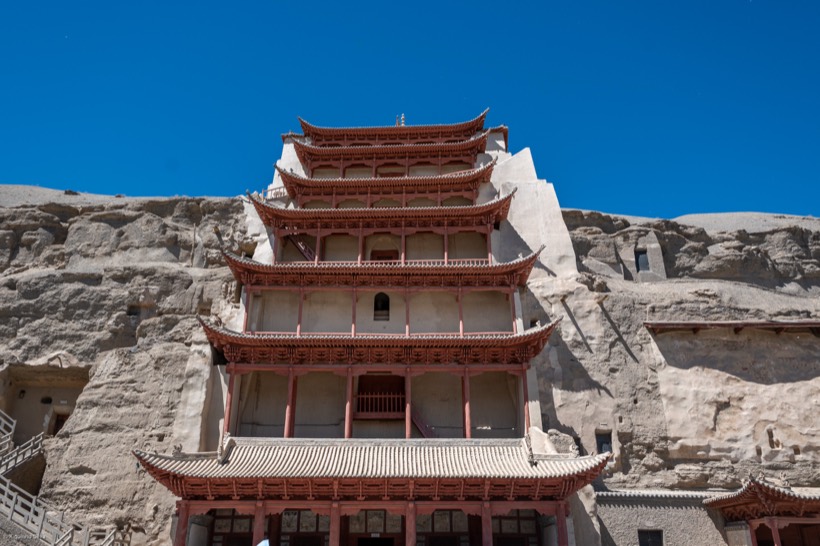
Mogao Caves & Dunhuang 莫高窟与敦煌
Four hundred and ninety-two painted caves in a desert cliff — a thousand years of Buddhist art, sealed and forgotten for nine centuries.
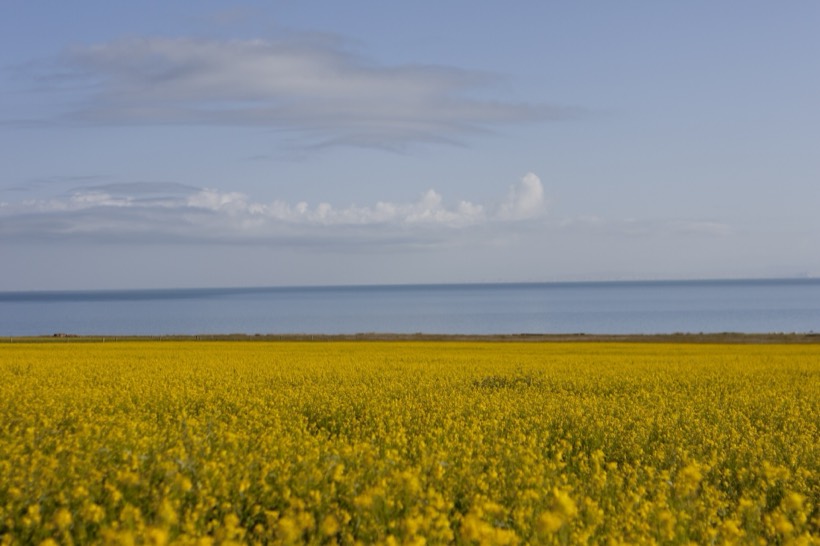
Qinghai Lake & Chaka 青海湖与茶卡盐湖
China's largest lake, saline and 3,200 metres up, ringed by rapeseed fields that turn the shore yellow every July.