Leshan Buddha & Mount Emei
乐山大佛与峨眉山 · Lèshān Dàfó & Éméi Shān
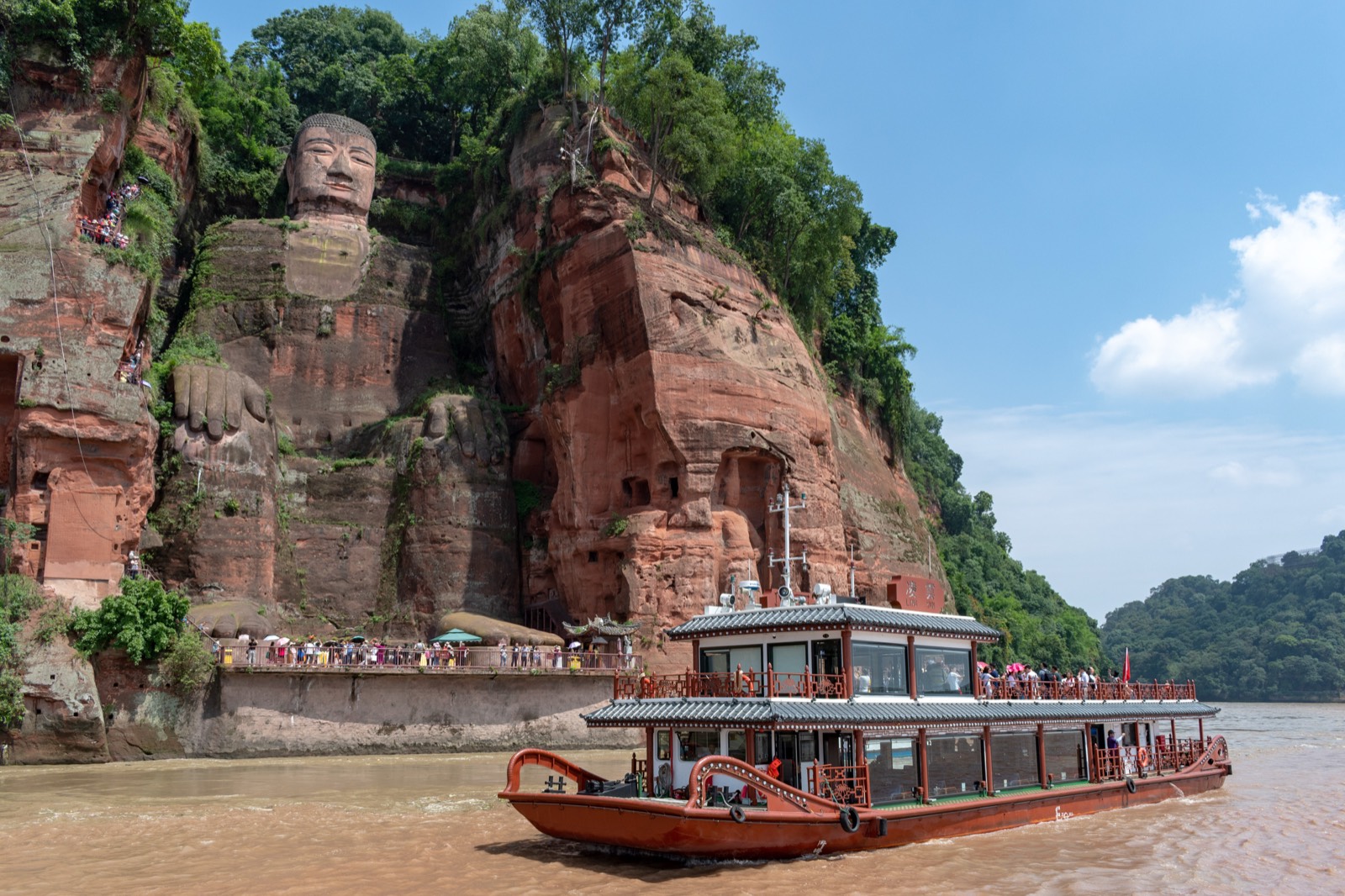
A 71-metre Buddha carved into a river cliff over ninety years, and a Buddhist mountain where the macaques rob you.
Photo: xiquinhosilva · CC BY 2.0
In 713 a monk named Hai Tong began carving a Buddha into the red sandstone cliff at the confluence of three rivers, on the theory that the falling rock would calm the currents that were wrecking boats below. It took ninety years and three generations of workers. The finished Maitreya is 71 metres tall — his shoulders are 28 metres across, his ears 7 metres, and a picnic could be held on the nail of his big toe. Hai Tong's theory even worked, more or less: the debris did change the riverbed.
It is listed jointly with Mount Emei, 30 km away, one of the four sacred mountains of Chinese Buddhism and the traditional home of the bodhisattva Samantabhadra. Emei rises to 3,099 metres and the classic pilgrimage is a two-day climb through subtropical forest, past monasteries where you can sleep, to a summit that is above the cloud layer more often than not and crowned by a 48-metre gilded statue.
Two warnings. The Tibetan macaques on Emei's Ecological Monkey Zone are large, unafraid and organised — they will take a bag off your shoulder. And the Leshan Buddha's cliff staircase is a single-file switchback down his right side that in peak season means a two-hour queue. Both are manageable if you plan for them.
Why go
- The largest pre-modern Buddha statue in the world, and the scale really does land
- Emei's summit cloud sea and the golden statue, best at sunrise
- A proper two-day mountain pilgrimage with monastery accommodation
- Both are 1–1.5 hours from Chengdu by high-speed rail
Highlights
Leshan Buddha from the river
The boat from Leshan pier (¥70, 30 minutes) gives you the full frontal view in ten minutes with no queue. Many people do this instead of the cliff stairs and are right to.
The cliff staircase
Nine turns down the Buddha's right side to his feet and back up the left. Extraordinary, claustrophobic, and slow — allow two hours in season.
Golden Summit, Emei
3,077 m, the 48 m gilded Samantabhadra on his ten-tusked elephant, and a cloud sea below on most clear mornings. Cable car from Jieyin Hall.
Emei monasteries
Wannian, Qingyin Pavilion and Hongchunping — you can sleep at several for ¥60–150 including a vegetarian dinner and the 05:00 bell.
Ecological Monkey Zone
Wild Tibetan macaques on the Qingyin–Wannian path. Entertaining and genuinely aggressive; carry nothing loose.
Photographs
Getting there & practicalities
Getting there
High-speed rail Chengdu to Leshan (1h) and Emeishan (1h15). The stations are 20–30 minutes by bus from each site, and the two are 40 minutes apart.
Tickets
Leshan Buddha ¥80; river boat ¥70. Emei park ¥160 (¥110 winter), plus the park bus ¥90 and the summit cable car ¥65 up / ¥55 down.
Opening hours
Leshan 07:30–18:30 summer. Emei park buses run from 06:00; the summit cable car from around 06:30.
Best time of day
Leshan first thing or by boat any time. Emei: overnight at Leidongping and go up for sunrise.
What everyone gets wrong
- Take the boat at Leshan unless you specifically want to walk down the cliff. The view is better and it costs you 30 minutes instead of three hours.
- For Emei, most visitors bus to Leidongping and take the cable car — the full two-day walk from the bottom is 50 km and very few foreigners do it.
- The summit is at 3,077 m and can be 20°C colder than the base with snow into April. Coats are rentable.
- Monkeys: no plastic bags, no visible food, do not make eye contact, and let go if one grabs your bag.
- Monastery stays need to be arranged on arrival, not online. Turn up before 17:00.
What to eat
- Emei vegetarian monastery food — genuinely excellent, especially the mushroom dishes
- Leshan is a Sichuan food town in its own right: bobo chicken, sweet-skin duck, and cold skewers
→Combine it with
Nearby and next
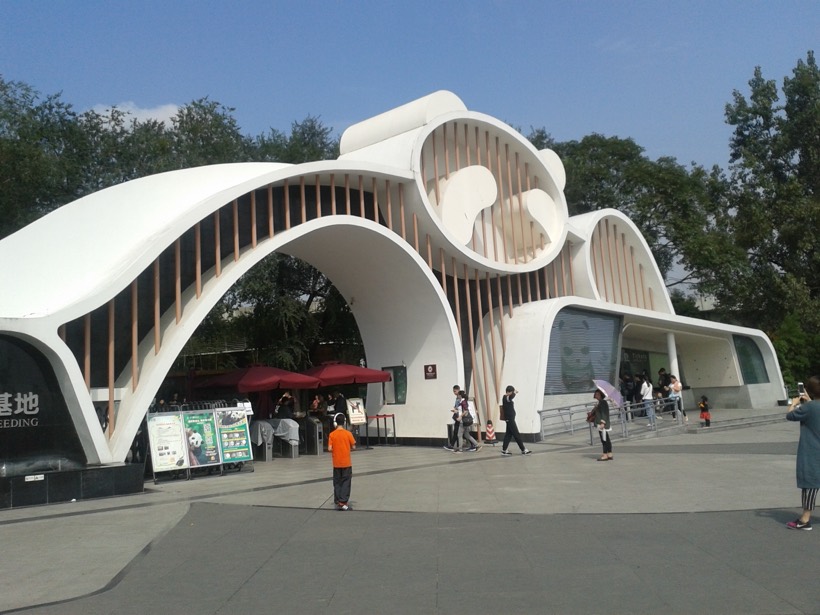
Chengdu & the Panda Base 成都
Pandas at breakfast, mahjong in a teahouse by ten, and the most numbing food in China by dinner.
 UNESCO
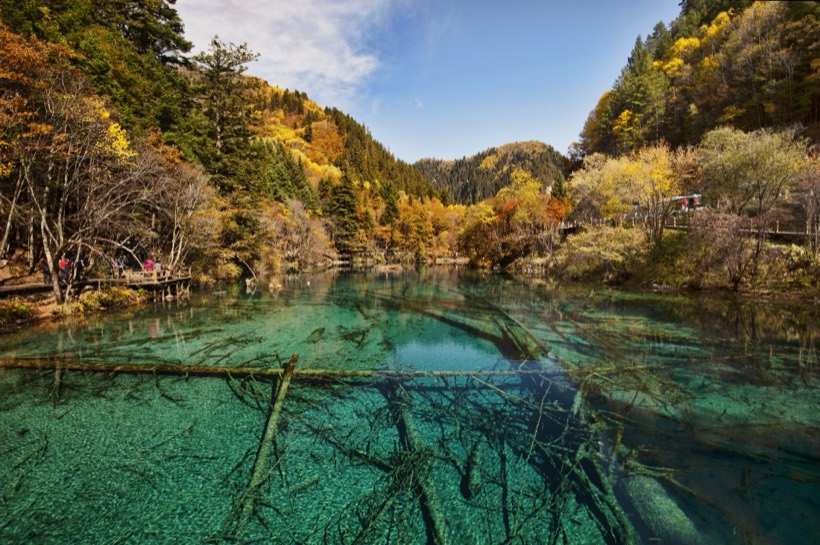
Jiuzhaigou Valley 九寨沟
A hundred and eight lakes in calcium-carbonate blue, stacked down a Y-shaped valley below the Tibetan plateau.
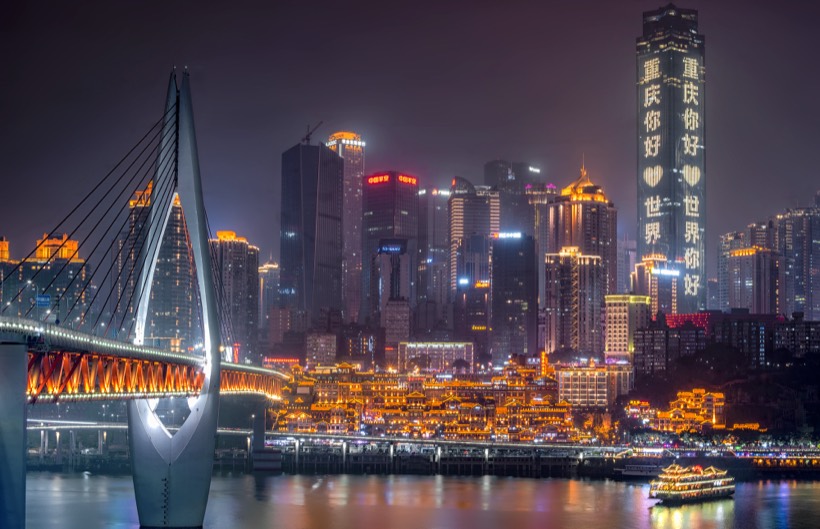
Chongqing 重庆
A city built vertically on cliffs between two rivers, where the metro drives through an apartment block and the ground floor might be the twenty-second.