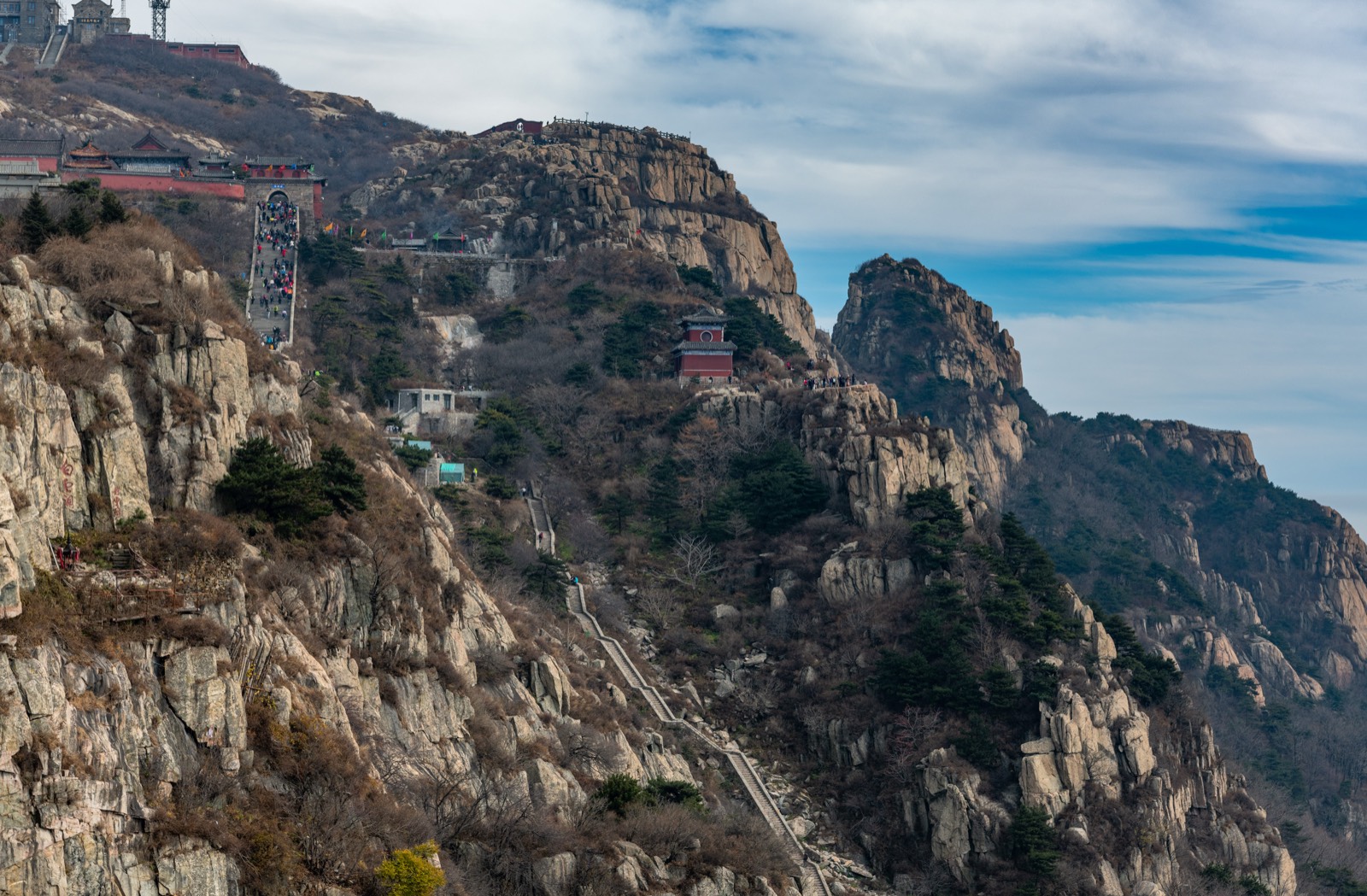
Sacred Mountains
名山
Nine peaks that pilgrims have climbed by stone staircase for two thousand years.
Photo: xiquinhosilva · CC BY 2.0
China's mountains are read as scripture. Five are Daoist — Tai, Hua, Heng, Heng and Song — and four are Buddhist, headed by Emei and Wutai. Almost all of them are climbed the same way: a stone staircase cut into the rock, temples every few hundred metres, a summit guesthouse, and a crowd that gets up at 4am for the sunrise above the cloud sea. Huangshan, technically neither, is the most beautiful of the lot.
04Covered in depth
4 destinations in this theme
 UNESCO
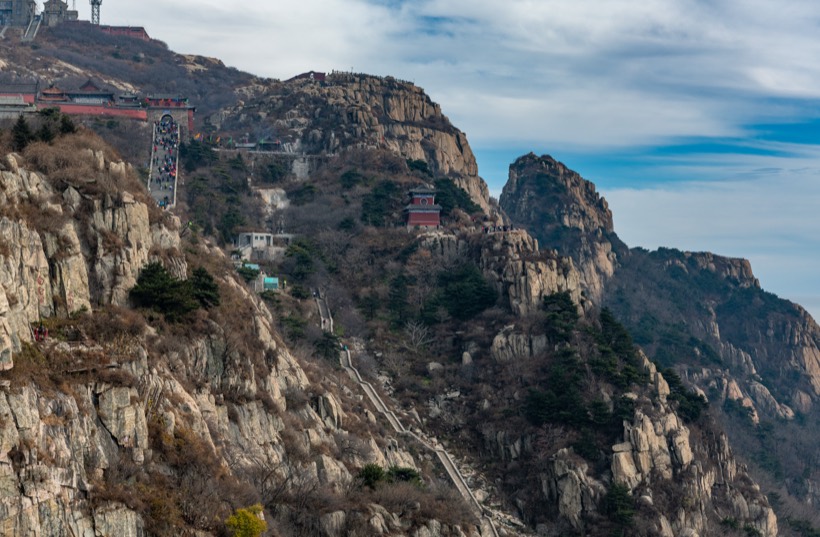
Mount Tai 泰山
Six thousand six hundred steps, seventy-two emperors, and three thousand years of people climbing this exact staircase.
 UNESCO
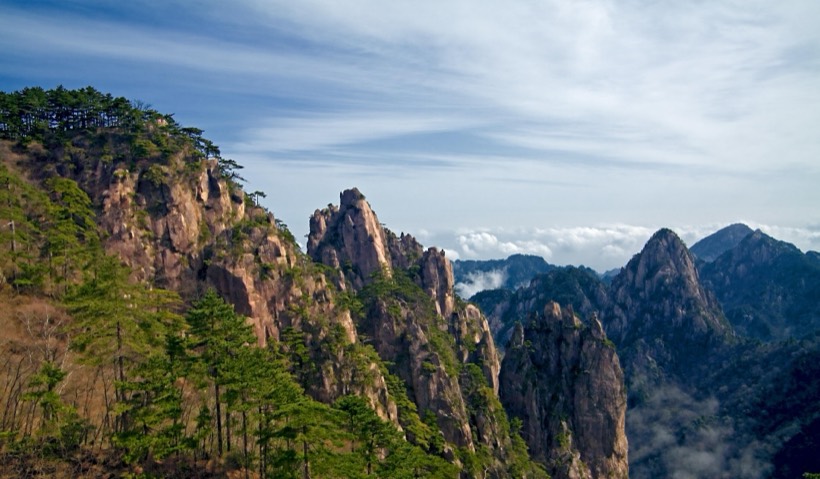
Huangshan (Yellow Mountain) 黄山
Granite spires, twisted pines and a sea of cloud — the mountain that taught Chinese painting what a mountain looks like.
 UNESCO
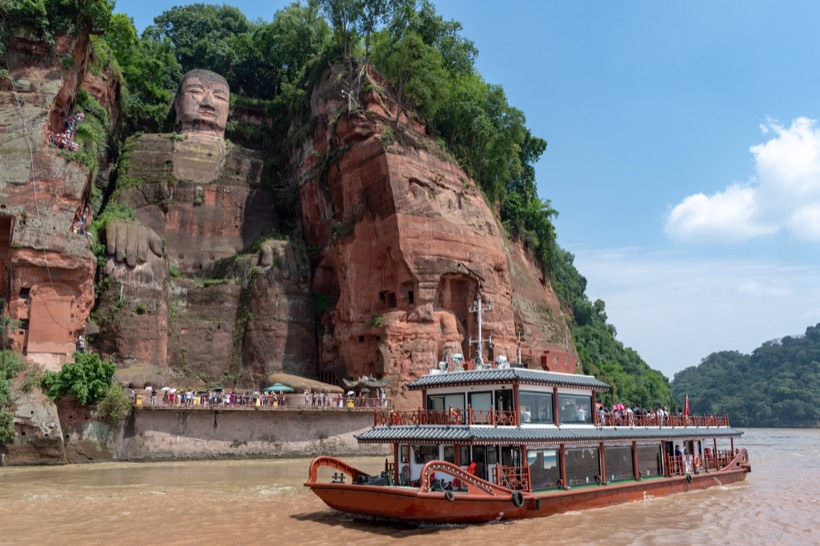
Leshan Buddha & Mount Emei 乐山大佛与峨眉山
A 71-metre Buddha carved into a river cliff over ninety years, and a Buddhist mountain where the macaques rob you.
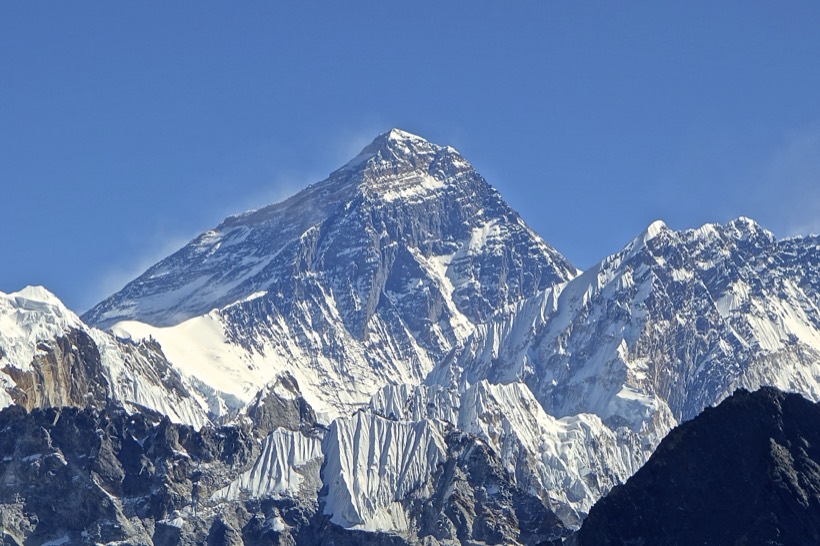
Everest North Base Camp 珠峰大本营
The one side of Everest you can reach by road — 5,200 metres, a monastery, and the whole north face in front of you.
+Also worth knowing
17 more from the full index
-
Wutai Shan五台山 UNESCO Shanxi
The first of the four Buddhist sacred mountains, with 47 working monasteries including two rare Tang timber halls.
-
Mount Hua华山 Shaanxi
The most dangerous of the sacred five: granite spires, chain-assisted ridges and the notorious plank walk bolted to a vertical face.
-
Shaolin Temple少林寺 UNESCO Henan
The Chan Buddhist monastery that gave the world kung fu, with a Pagoda Forest of 240 monk tombs. Heavily commercialised.
-
Putuoshan普陀山 Zhejiang
An island sacred to Guanyin, the bodhisattva of compassion — monasteries, beaches and a 33-metre seaside statue.
-
Mount Lu庐山 UNESCO Jiangxi
A cloud-wrapped summer hill station of European villas, waterfalls, and 1,500 years of poetry about not seeing the mountain for the mist.
-
Sanqingshan三清山 UNESCO Jiangxi
Granite pillars and cliff-edge boardwalks in a Daoist range, less crowded and nearly as beautiful as Huangshan.
-
Longhushan龙虎山 UNESCO Jiangxi
The birthplace of religious Daoism, with red Danxia cliffs and 2,600-year-old hanging coffins winched into caves.
-
Mount Siguniang四姑娘山 UNESCO Sichuan
Four peaks to 6,250 m four hours from Chengdu, with three trekking valleys and the best alpine scenery in eastern Tibet.
-
Daocheng Yading稻城亚丁 Sichuan
Three sacred snow peaks above turquoise lakes at 4,600 m — the 'last Shangri-La', and a serious altitude commitment.
-
Hailuogou Glacier海螺沟 Sichuan
A glacier tongue descending to 2,850 m below the 7,556 m Gongga Shan, with hot springs at its foot.
-
Meili Snow Mountain梅里雪山 UNESCO Yunnan
Kawagarbo, 6,740 m, sacred and never climbed — a wall of thirteen peaks seen from Feilai Si at dawn.
-
Fanjingshan梵净山 UNESCO Guizhou
A 2,336 m quartzite pillar with two temples on top, reached by 8,888 steps or a cable car, above a cloud sea.
-
Mount Kailash冈仁波齐 Tibet
Sacred to four religions and never climbed. The 52 km kora takes three days over a 5,630 m pass.
-
Wudang Mountains武当山 UNESCO Hubei
The Daoist counterpart to Shaolin and the home of tai chi, with Ming palace-temples strung up to a bronze hall on the summit.
-
Hengshan南岳衡山 Hunan
The southern peak of the Daoist five, wooded and temple-strewn, and much gentler than Hua or Tai.
-
Jiuhuashan九华山 Anhui
The Buddhist sacred mountain of Ksitigarbha, with 90 working temples and several mummified monks on display.
-
Laoshan崂山 Shandong
A Daoist granite range rising straight out of the Yellow Sea beside Qingdao, with temples and spring water famous enough to name a beer.