Nanjing
南京 · Nánjīng
The southern capital: Ming walls, a spirit road of stone animals, and the most sober memorial in China.
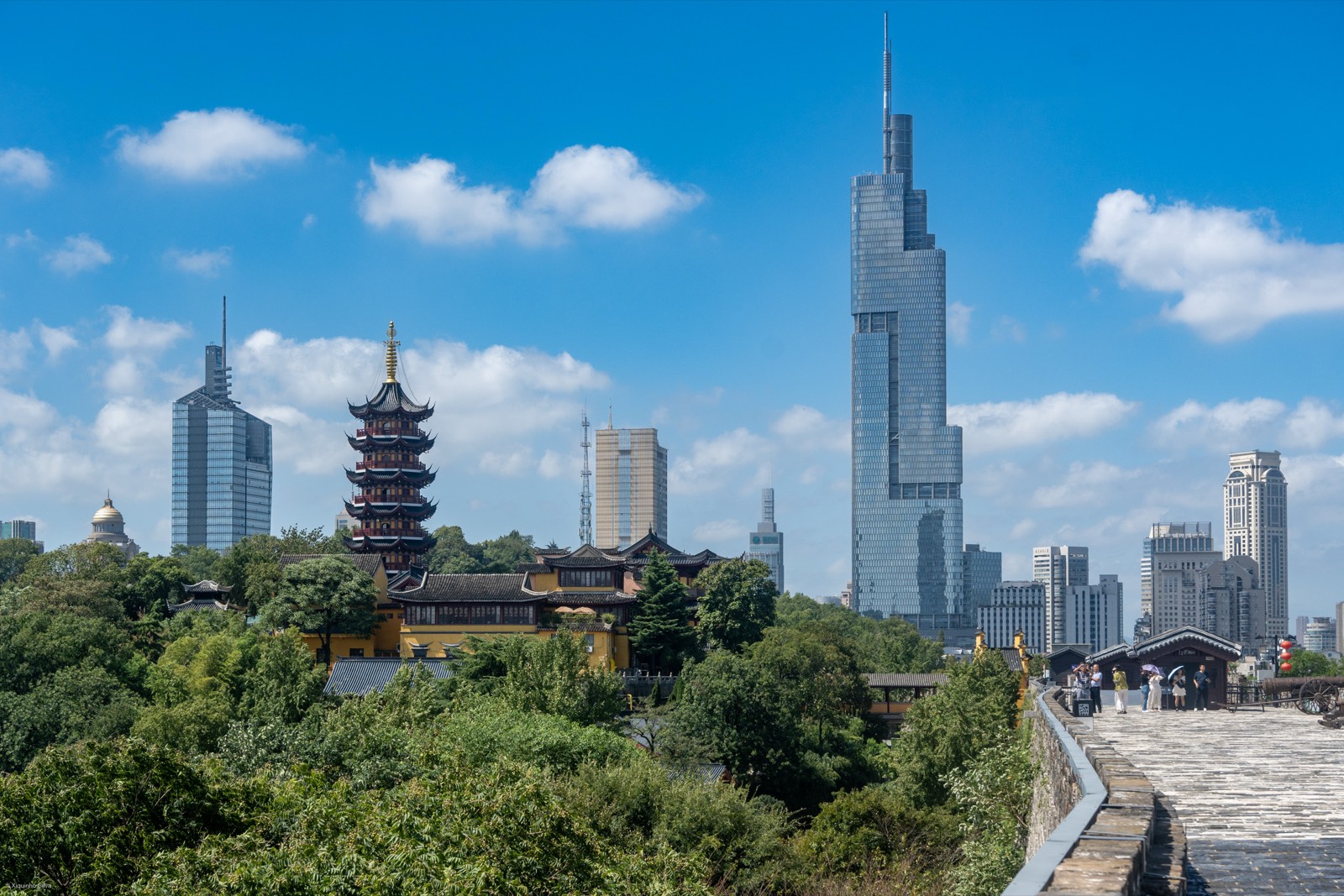
Photo: xiquinhosilva · CC BY 2.0
Nanjing has been the capital of ten dynasties and states, most consequentially the early Ming from 1368, the Taiping Heavenly Kingdom in the 1850s, and the Republic of China from 1927. Each left something. The Ming built a 35-kilometre city wall — the longest ever constructed anywhere, with 20 million bricks each stamped with the name of the maker so faults could be traced — of which 25 km survives and much can be walked.
The Ming Xiaoling Mausoleum, tomb of the founding emperor Zhu Yuanzhang, sits under Purple Mountain at the end of a spirit road lined with stone elephants, camels, lions and mythical qilin. In November the avenue's plane and ginkgo trees turn and it is one of the most beautiful streets in China. Sun Yat-sen's vast blue-and-white mausoleum is on the same hill, up 392 granite steps.
And there is December 1937. The Nanjing Massacre Memorial Hall is built over a mass grave and it is unsparing, meticulous and extremely difficult. It is also, for a foreign visitor, close to essential — modern Chinese attitudes to Japan and to the twentieth century are not comprehensible without it. Allow two hours and do not plan anything cheerful afterwards.
Why go
- The longest city wall ever built, still walkable in long sections
- The Ming spirit road, especially in the last two weeks of November
- Serious, well-presented history from the Six Dynasties to 1937 to 1949
- Under-touristed by foreigners, and 1h15 from Shanghai by rail
Highlights
Ming City Wall & Zhonghua Gate
Zhonghua Gate is a fortress in itself — four successive gates with 27 troop-hiding tunnels inside the walls. Walk the ramparts from here toward the Qinhuai River.
Ming Xiaoling Mausoleum
The founding Ming emperor's tomb, its 1.8 km spirit road lined with 12 pairs of stone beasts. Late November for the colour.
Sun Yat-sen Mausoleum
392 steps up Purple Mountain to a blue-tiled hall over the founder of the Republic. Free but ticketed; book ahead.
Nanjing Massacre Memorial Hall
Built over an excavated mass grave. Free, harrowing, and the most serious museum experience in the country.
Confucius Temple & Qinhuai River
The old examination quarter, now restored and lantern-lit, with pleasure boats on the river. Touristy, lively, good for an evening.
Nanjing Museum
One of China's top three, with an outstanding Republic-era street reconstruction in the basement. Free with booking.
Photographs
Getting there & practicalities
Getting there
Nanjing South station: 1h15 from Shanghai, 3h30 from Beijing, 2h from Hangzhou. An excellent metro network links everything; Line 2 runs to Purple Mountain.
Tickets
Ming Xiaoling ¥70; Zhonghua Gate ¥50; Nanjing Museum and the Massacre Memorial free with advance booking; Sun Yat-sen Mausoleum free, timed entry.
Opening hours
Most sites 08:30–17:00. The Massacre Memorial closes Mondays.
Best time of day
Purple Mountain in the morning, the wall at dusk, Qinhuai after dark.
What everyone gets wrong
- The Massacre Memorial is genuinely distressing and includes graphic photographic evidence. Consider carefully whether to bring children.
- Purple Mountain sites are spread out; take the sightseeing shuttle or budget a lot of walking.
- Late November is the best fortnight of the year here for the ginkgo and plane trees.
- Nanjing is a big, real city rather than a tourist town — expect little English outside major sites.
- It slots naturally between Shanghai and Xi'an or Beijing on the high-speed network.
What to eat
- Salted duck (yanshuiya), the city's signature — cold, brined, subtle
- Duck blood and vermicelli soup, better than it sounds
- Xiaolongbao here are soupier and sweeter than Shanghai's; try Jiming Temple's vegetarian noodles
→Combine it with