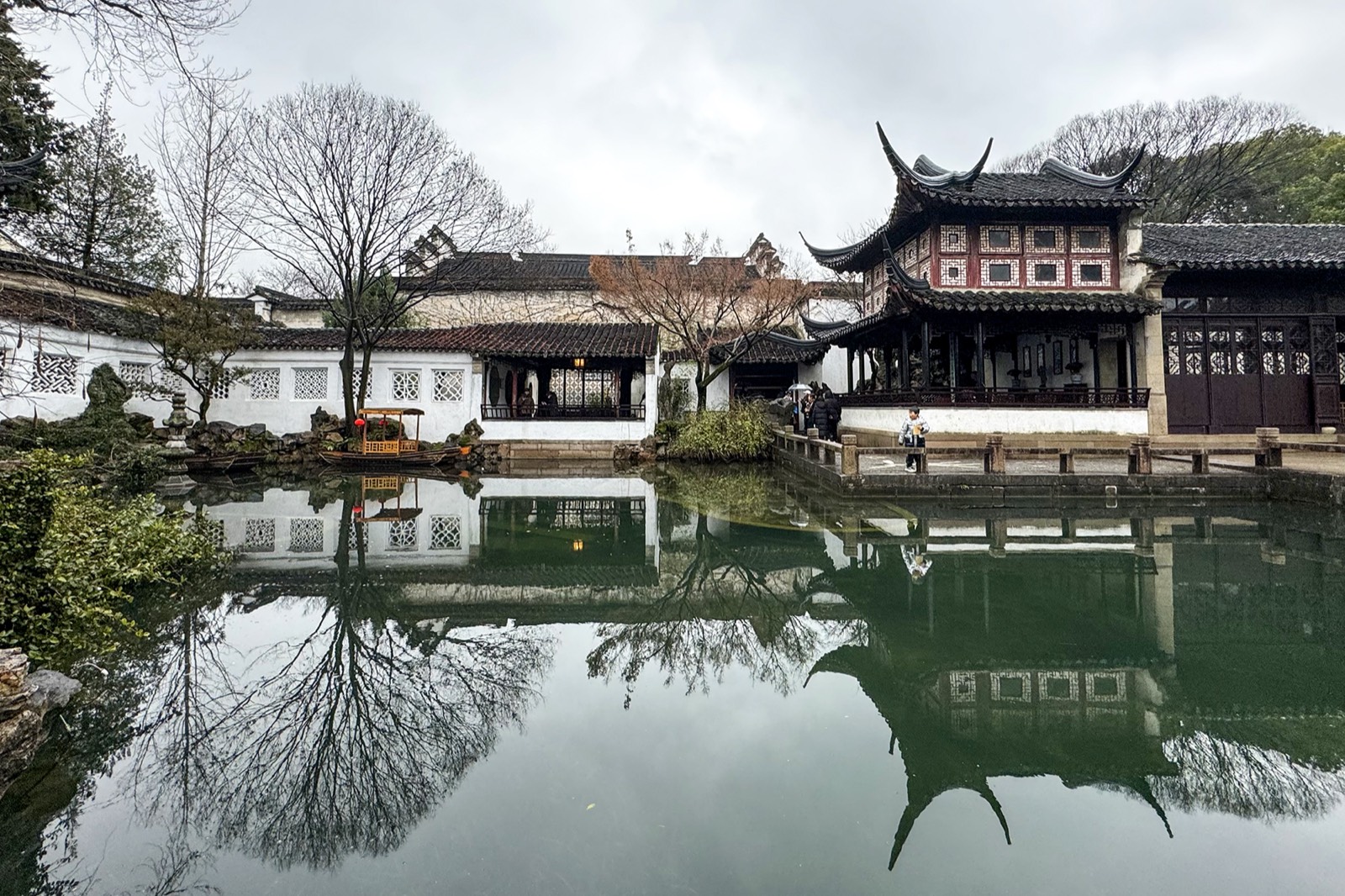
Suzhou Classical Gardens
苏州园林 · Sūzhōu Yuánlín
Nine gardens on the World Heritage list, each one a whole landscape compressed into a courtyard.
Photo: Windmemories · CC BY-SA 4.0
Suzhou got rich on silk and canals and its scholar-officials spent that money on gardens — over two hundred of them by the Ming, of which some sixty survive and nine are inscribed by UNESCO. These are not gardens in the European sense. There is no lawn, no vista, no symmetry. They are enclosed compositions of water, rock, plants and architecture designed to be experienced in sequence, where a moon-gate frames one view, a covered walkway forces you to turn, and a latticed window offers a deliberately partial glimpse of what is next.
The governing idea is that a garden should contain a world. Taihu limestone, eroded into holes by the lake and prized for exactly that, stands in for mountains. A pond of a few hundred square metres reads as a lake because a bridge crosses it low and a pavilion sits at the far end at the correct scale. Nothing is accidental, and the best of them repay slow, repeated circuits.
The city around them is worth a day of its own: a Song-dynasty canal grid still largely intact, Pingjiang Road running alongside the water, the excellent I.M. Pei-designed Suzhou Museum, and a silk industry that has been operating continuously for 2,500 years.
Why go
- The finest expression of Chinese garden design, and the only place you can compare nine of them
- I.M. Pei's Suzhou Museum, a modern building in dialogue with the gardens next door
- 25 minutes from Shanghai by high-speed rail — the easiest great day trip in China
- Canal walking, silk workshops and Kunqu opera in the evening
Highlights
Humble Administrator's Garden
The largest and most famous, 5 hectares, three linked sections around a central pond. Go at opening; by 10:00 it is very busy.
Lingering Garden
Smaller and, many argue, better composed — famous for its sequence of framed views and the 6.5-metre Cloud-Capped Peak, the finest single Taihu rock in China.
Master of the Nets Garden
Tiny, perfect, and the one to visit if you visit only one. Its scale is domestic and legible. Evening Kunqu opera performances in summer are held in its courtyards.
Suzhou Museum
I.M. Pei's last major work, opened 2006, a white-and-grey abstraction of a Suzhou courtyard house. Free, ticketed, superb.
Pingjiang Road
A 1.6 km canal-side lane in the old grid — teahouses, pingtan storytelling, and the best evening stroll in the city.
Tongli & Zhouzhuang
Canal towns 30–60 minutes out, worth an overnight if Wuzhen doesn't fit your route.
Photographs
Getting there & practicalities
Getting there
High-speed rail from Shanghai Hongqiao takes 25 minutes and runs constantly. Suzhou has a good metro; most gardens are on Line 4 or a short taxi from the old town.
Tickets
Humble Administrator's ¥80 (¥70 winter); Lingering Garden ¥55; Master of the Nets ¥40; Suzhou Museum free with booking. A combined ticket exists but rarely saves money.
Opening hours
Gardens 07:30–17:30 (last entry 17:00); Suzhou Museum 09:00–17:00, closed Mondays.
Best time of day
07:30 opening at the big gardens is transformative — you get 45 minutes of near-emptiness.
What everyone gets wrong
- Two gardens a day is the maximum before they blur. Pick one large, one small.
- Book Suzhou Museum online well ahead; it is one of the hardest free tickets in the country.
- Rain is good here. The gardens were designed for it — rain on banana leaves is a documented design intention.
- Master of the Nets in the evening, with lantern light and opera, is a completely different and better experience.
- Suzhou is very doable as a day trip but a night in the old town near Pingjiang Road is a much nicer trip.
What to eat
- Squirrel-shaped mandarin fish, scored, deep-fried and sauced — Suzhou's showpiece dish
- Biluochun green tea from the Dongting hills, picked in early spring
- Suzhou-style noodles in clear broth with a separate topping, eaten for breakfast at Tongdexing
→Combine it with
Nearby and next
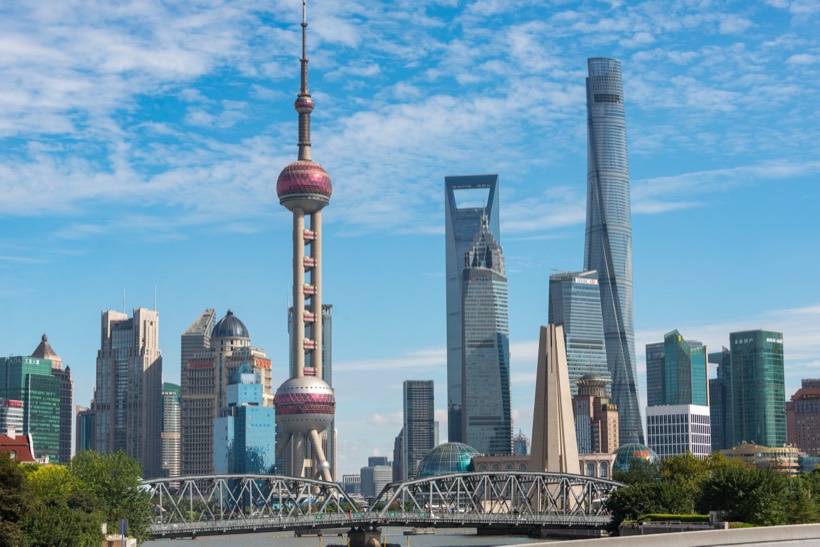
Shanghai 上海
A 1920s waterfront staring across a river at the tallest skyline in Asia, with the best restaurant scene in China in between.
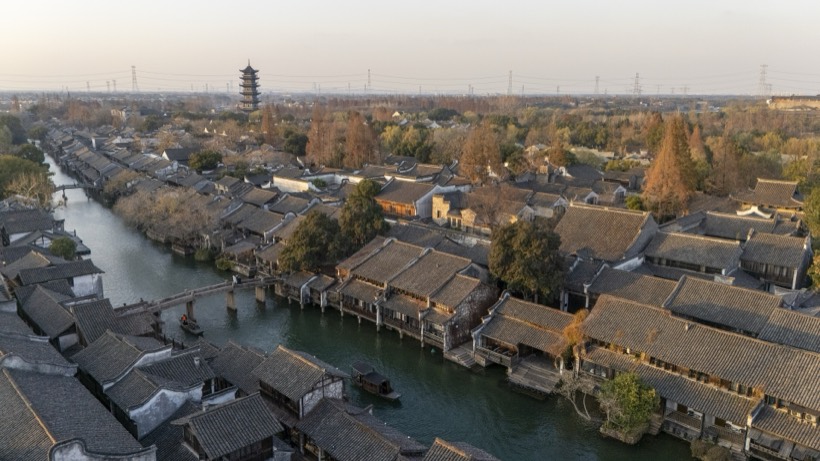
Wuzhen & the Water Towns 乌镇
Stone bridges, black-tiled waterfront houses and a canal grid that has been the Yangtze delta's transport system for 1,300 years.
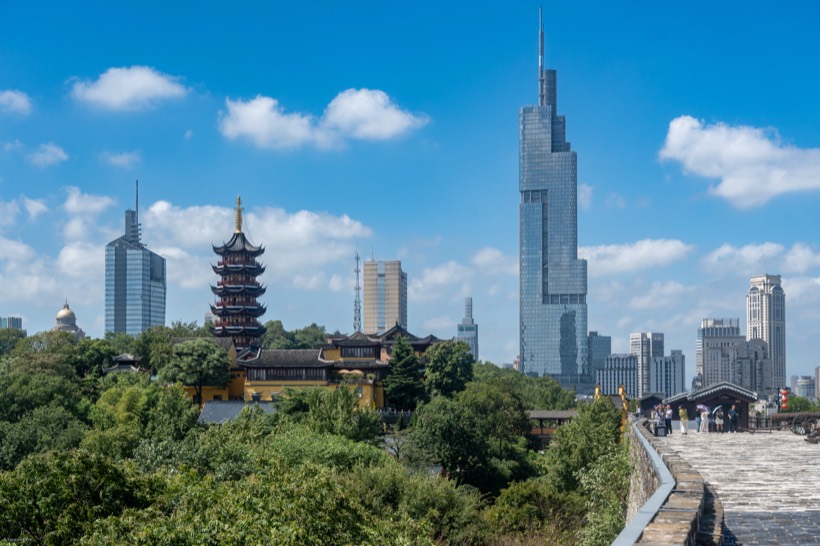
Nanjing 南京
The southern capital: Ming walls, a spirit road of stone animals, and the most sober memorial in China.