
Yuanyang Rice Terraces
元阳梯田 · Yuányáng Tītián
Sixteen hundred years of Hani terracing across a whole mountain range — and in winter, at dawn, the flooded fields turn to fire.
Photo: Jialiang Gao, www.peace-on-earth.org · CC BY-SA 3.0
The Hani people have been cutting terraces into the Ailao mountains above the Red River for at least 1,300 years, and probably longer. The system covers 16,600 hectares and rises through more than 3,000 steps from the river valley at 500 metres to the forest at 2,000, and it is a complete engineered ecology: forest at the top catches cloud moisture, channels distribute it down through the villages, the villages' waste fertilises the fields, and fish and ducks live in the flooded paddies. UNESCO listed the whole cultural landscape in 2013.
Unlike Longji or the Philippine terraces, the peak season here is winter. The rice is harvested in autumn and the terraces are then flooded and left fallow from November to March, which turns the entire mountainside into thousands of mirrors. At sunrise and sunset the water catches the sky, and on the right morning — with mist filling the valleys below and the sun coming up behind the ridge — the terraces glow orange, pink and violet in bands. It is one of the great photographic subjects on earth.
The practical base is Duoyishu or Pugaolaozhai village. The three classic viewpoints — Duoyishu for sunrise, Laohuzui for sunset, Bada for either — are spread over 25 km of mountain road, so you either hire a driver for two days or stay in a guesthouse that runs the dawn shuttle.
Why go
- A winter destination in China that is at its absolute best in January
- Living Hani and Yi villages with mushroom-shaped thatched houses
- Photographically, arguably the single best location in the country
- Genuinely few foreign visitors, even in peak season
Highlights
Duoyishu at sunrise
The classic. Be on the platform by 06:30 in winter. Mist in the valley, sun over the far ridge, and the terraces lighting up in sequence.
Laohuzui (Tiger's Mouth) at sunset
The most dramatic terrace geometry, with long curving lines. West-facing, so it is the sunset counterpart to Duoyishu.
Bada terraces
The widest panorama of the three, good in both directions, and usually the least crowded platform.
Qingkou Hani village
Mushroom houses with thatched roofs, a working village rather than a display, 10 minutes from Xinjie town.
Shengcun market
A rotating five-day market cycle across the villages — Hani and Yi women in full embroidered dress, and no tourist infrastructure at all.
Photographs
Getting there & practicalities
Getting there
High-speed rail Kunming to Jianshui (2h) or Mengzi, then bus or car to Xinjie (Yuanyang old town), 2–3 hours on mountain road. A direct Kunming–Yuanyang bus takes 5–6 hours. Most people hire a car and driver from Jianshui.
Tickets
¥100 for a through-ticket covering Duoyishu, Laohuzui and Bada, valid several days.
Opening hours
Viewing platforms open before dawn; the ticket office may not be staffed at 06:00, which is fine.
Best time of day
Late December to late February for flooded terraces. Sunrise and sunset only — midday light is flat and the terraces look dull.
What everyone gets wrong
- Stay in Duoyishu village, not Xinjie town. Xinjie is 40 minutes from the sunrise platform and you will not make it.
- Winter mornings at 1,800 m are cold — near freezing — with a long wait on an exposed platform. Bring layers.
- Fog is common and can obscure everything. Give yourself two or three mornings.
- Jianshui, on the way, is a lovely under-visited old town with a huge Confucian temple. Break the journey there.
- Hire a driver for the two days (¥400–500). Public transport between the viewpoints barely exists.
What to eat
- Hani long-table banquet food — sour bamboo shoots, wild herbs, and river fish from the terraces
- Jianshui grilled tofu, cooked over charcoal and counted with corn kernels
→Combine it with
Nearby and next
 UNESCO
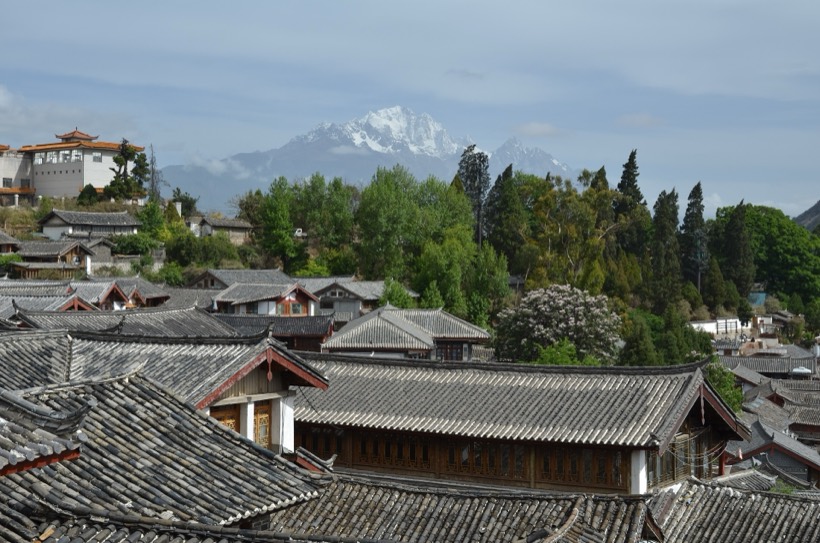
Lijiang Old Town 丽江古城
A Naxi town of cobbles and canals under an 5,596-metre snow peak, with the last living pictographic script on earth.
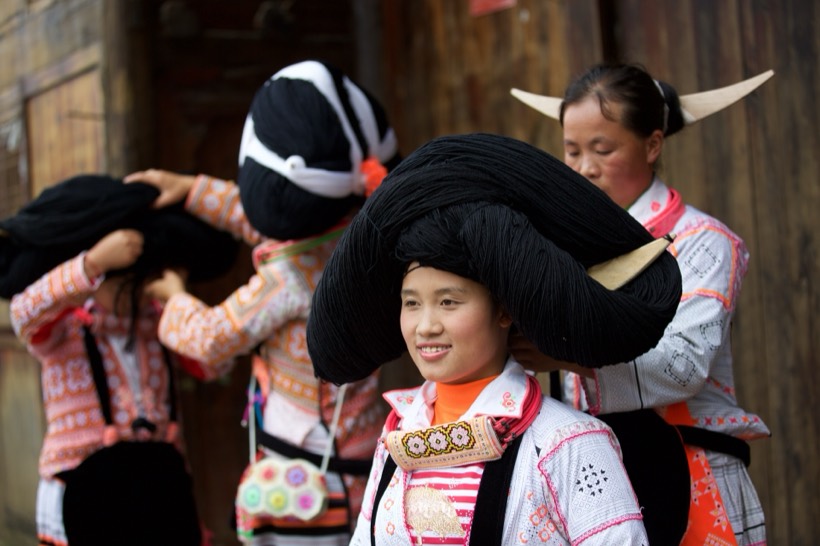
Guizhou: Miao & Dong Country 贵州苗侗村寨
Hillside villages of a thousand stilt houses, silver headdresses weighing ten kilos, and drum towers built without a single nail.