Zhangye Danxia
张掖丹霞 · Zhāngyè Dānxiá
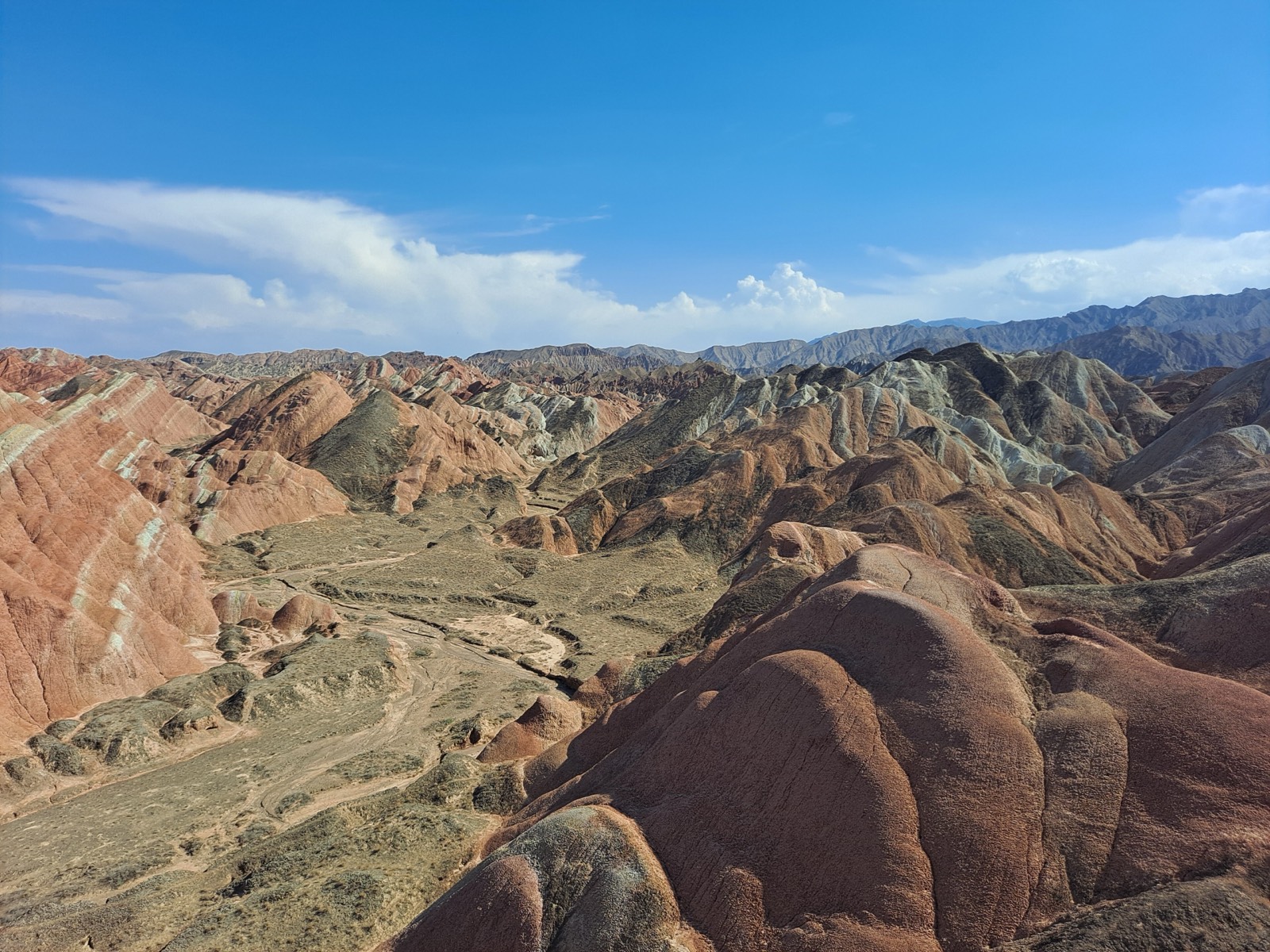
Hills striped in red, orange, yellow and green — twenty-four million years of mineral sediment tilted on its side.
Photo: H2v5o68z · CC0
Danxia is a landform type named after a mountain in Guangdong: red terrestrial sandstone and conglomerate, weathered into cliffs and towers. The Zhangye version is the colour outlier. Here, layers of sandstone and siltstone laid down over 24 million years contain different iron and trace-mineral oxides — haematite reds, limonite yellows, chlorite greens — and tectonic uplift from the India–Eurasia collision tilted the whole sequence to between 30 and 80 degrees. Erosion then cut across the tilted layers, exposing them as stripes running diagonally across the hillsides.
The result photographs as though someone has run a paint roller over the landscape, and the persistent internet accusation that the images are faked is understandable but wrong. The colours are real, though — and this matters for planning — they are far more saturated after rain, and at low sun angles. Midday in dry weather, the same hills are a washed-out beige and visitors go away disappointed.
Zhangye itself was a major Hexi Corridor garrison town and has a genuine treasure: the Giant Buddha Temple, holding a 34.5-metre reclining Buddha built in 1098 — the largest indoor reclining Buddha in China, in a Western Xia temple that has survived nine centuries.
Why go
- A geological spectacle that looks like nothing else in the country
- Excellent infrastructure — four viewing platforms linked by shuttle, easy for all fitness levels
- The 1098 reclining Buddha in Zhangye town, an underrated masterpiece
- Directly on the Lanzhou–Dunhuang high-speed line, so it slots into a Silk Road route at no cost
Highlights
Platform 4
The main sunset viewpoint, with the widest striped panorama. Get there 45 minutes before sunset and take the upper terrace.
Platform 2
The most intense colour banding and the shortest walk. Best in the first two hours after sunrise.
Binggou Danxia
A separate ticket 10 km away: sculpted red rock towers and canyons rather than stripes. Fewer people, different and excellent.
Giant Buddha Temple
In Zhangye town: a 34.5 m reclining Buddha from 1098 with original Western Xia murals. Kublai Khan was reportedly born nearby.
Mati Si (Horse Hoof Temple)
60 km south: Buddhist grottoes cut into a cliff face with connecting internal staircases, on the Tibetan-plateau edge with grassland and snow peaks behind.
Photographs
Getting there & practicalities
Getting there
Zhangye West station is on the high-speed line — 2h30 from Lanzhou, 2h from Jiayuguan, 4h from Dunhuang. The Danxia geopark is 40 km west of town; buses run from the West Bus Station, or a taxi is ¥100–120.
Tickets
Danxia geopark ¥54 plus ¥20 shuttle. Binggou Danxia ¥40. Giant Buddha Temple ¥41.
Opening hours
06:00–19:00 in summer, 07:00–18:00 in winter — the early and late opening exists precisely for the light.
Best time of day
The hour after sunrise or before sunset. Ideally the day after rain. Midday is genuinely not worth photographing.
What everyone gets wrong
- Buy the ticket for a late-afternoon entry and stay for sunset. The shuttle runs between platforms until after the sun goes.
- Sunrise is quieter than sunset and the light is just as good. Very few people do it.
- It gets windy and there is no shelter on the platforms. Sand and dust get into cameras.
- The 'Rainbow Mountains' hype sets expectations very high. On a flat grey afternoon you will be disappointed; on a clear evening you will not.
- Combine Zhangye and Jiayuguan into one two-night stop on the way to Dunhuang.
What to eat
- Zhangye's beef noodle soup and 'saozi' noodles; Gansu is lamb and hand-pulled noodle country
- Local wolfberries (goji) and the Hexi Corridor's surprisingly good wine
→Combine it with
Nearby and next
 UNESCO
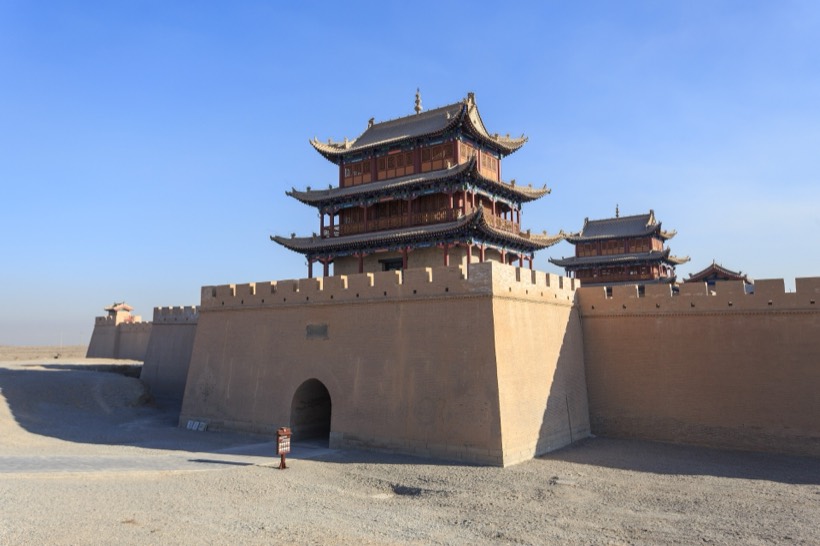
Jiayuguan Fort 嘉峪关
Where the Great Wall ends: a Ming fortress in the desert, between a snow range and the Gobi, that marked the edge of the civilised world.
 UNESCO
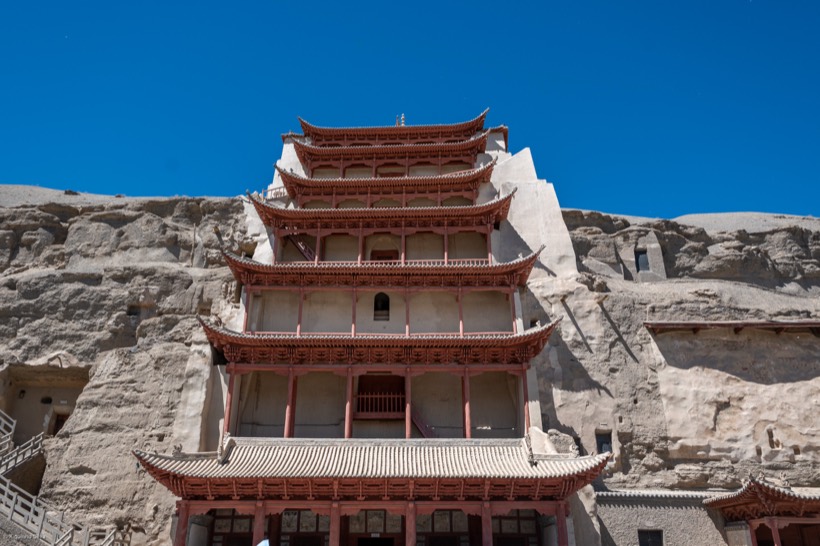
Mogao Caves & Dunhuang 莫高窟与敦煌
Four hundred and ninety-two painted caves in a desert cliff — a thousand years of Buddhist art, sealed and forgotten for nine centuries.
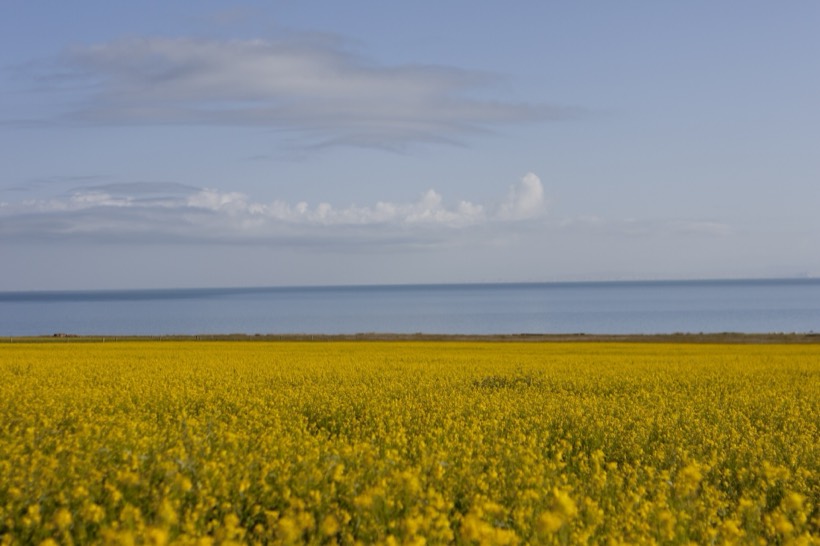
Qinghai Lake & Chaka 青海湖与茶卡盐湖
China's largest lake, saline and 3,200 metres up, ringed by rapeseed fields that turn the shore yellow every July.