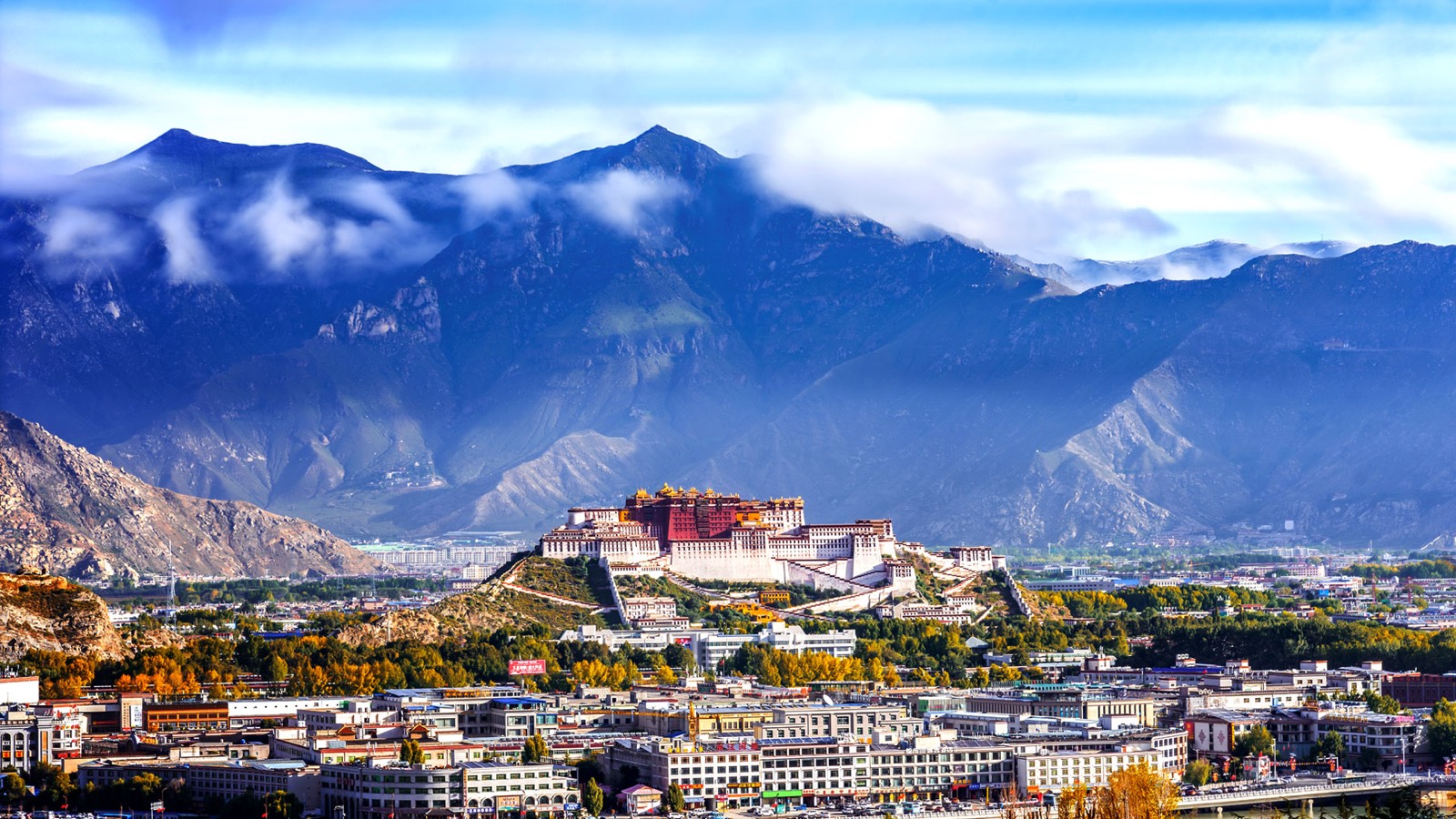
The Tibetan Plateau
青藏高原
The roof of the world: monasteries, turquoise lakes and thin bright air.
Photo: Lhasa Government · CC BY-SA 4.0
Above 3,500 metres the air thins, the light hardens and the architecture turns to whitewash and ochre. The Tibet Autonomous Region requires a permit and an organised tour for foreign visitors; the Tibetan cultural areas of western Sichuan, Qinghai and Yunnan do not, and are the easier way in. Everywhere, altitude is the governing constraint — plan slow days at the start.
Provinces & regions: Tibet · Qinghai · Western Sichuan · Northwest Yunnan
Best time to go: April to October. Peak is July–August; May and September are clearer.
02Covered in depth
2 destinations in this region
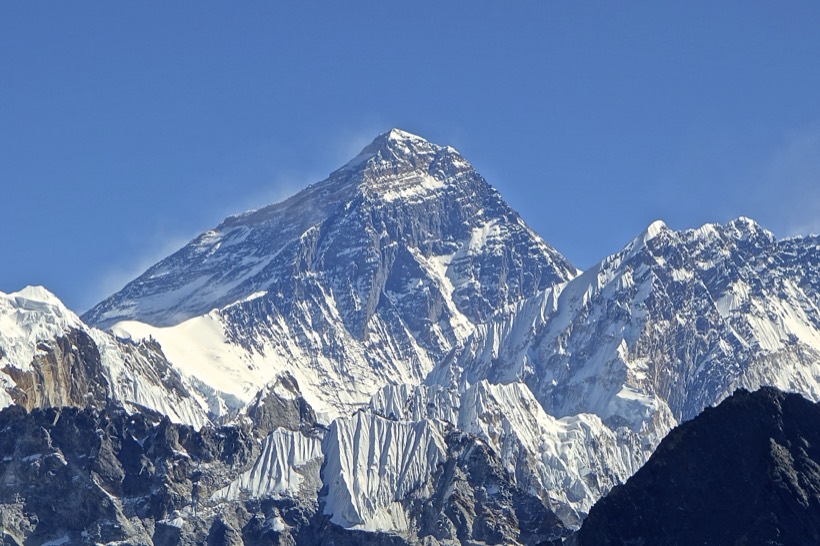
Everest North Base Camp 珠峰大本营
The one side of Everest you can reach by road — 5,200 metres, a monastery, and the whole north face in front of you.
 UNESCO
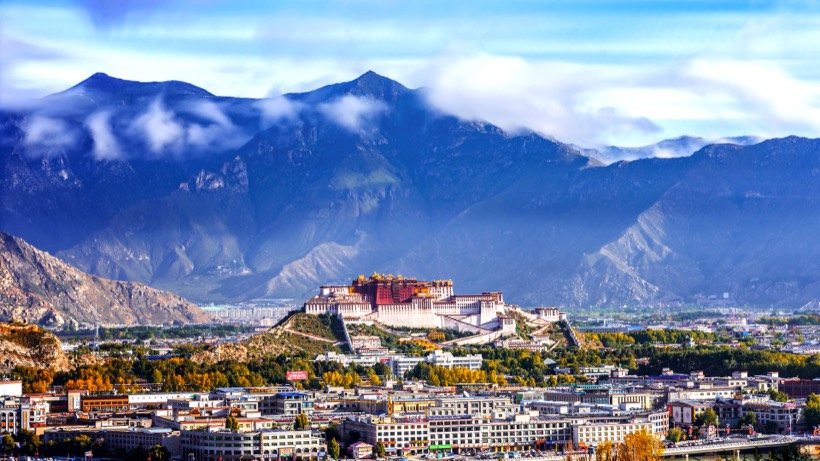
Lhasa & the Potala 拉萨与布达拉宫
A thousand-room palace on a rock at 3,700 metres, and a pilgrimage circuit that has not stopped turning for thirteen centuries.
+Also worth knowing
5 more from the full index
-
Nyingchi & Yarlung Tsangpo林芝 Tibet
Tibet's low, green corner at 3,000 m — peach blossom in late March and the deepest canyon on earth.
-
Namtso Lake纳木错 Tibet
A sacred salt lake at 4,718 m under the Nyenchen Tanglha range. Day-trippable from Lhasa, but the altitude is real.
-
Mount Kailash冈仁波齐 Tibet
Sacred to four religions and never climbed. The 52 km kora takes three days over a 5,630 m pass.
-
Sakya Monastery萨迦寺 Tibet
A grey-walled fortress monastery holding a library of 84,000 scrolls, some sealed in a wall for centuries.
-
Yushu & Jyekundo玉树 Qinghai
A Kham Tibetan town at 3,700 m rebuilt after the 2010 earthquake, with the largest mani stone pile in the world.